

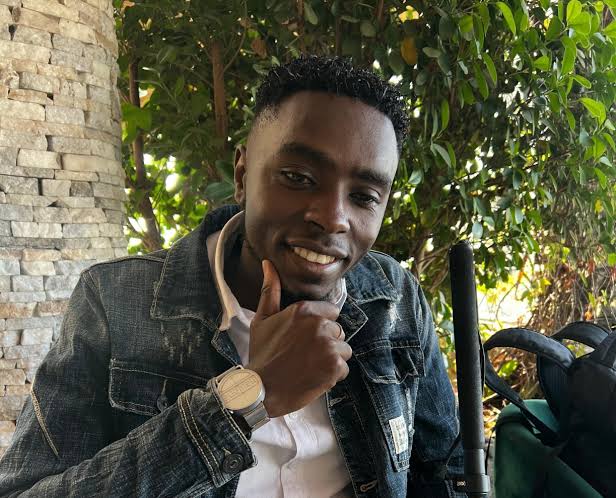
For Julio J Supercharge, experiencing Kenya has never been limited to what the eyes can see.
The creative artiste, who lost his sight at the age of 10 and is now partially sighted, is using his personal journey to advocate for a more inclusive tourism industry through the Kenya Beyond Sight campaign.
The initiative seeks to challenge the traditional idea of tourism as something experienced primarily through vision, encouraging travellers to discover Kenya through sound, touch, smell, taste and other senses.
The campaign brings together Supercharge, Denno Music, Sammy Brayo, Nancy Cosy, Chelah Richards and Delvin Obura, alongside partners including KCB, RUBiS Energy and the Kenya Tourism Board (KTB).
Speaking during the launch, KTB Chief Executive Officer June Chepkemei said the campaign reflected the need for Kenya’s tourism destinations to be accessible and welcoming to a wider range of visitors.
“We believe that our destination must be accessible, welcoming and enjoyable to all visitors,” Chepkemei said.
A journey shaped by sight loss
For Supercharge, the campaign is deeply personal.
His childhood in Nairobi was marked by curiosity and a fascination with the world around him. He enjoyed drawing, making toy cars from wires and travelling to Murang’a, where he developed an appreciation for tea farms, local traditions and Kikuyu culture.
His life changed after he lost his sight at 10.
As his vision deteriorated, activities that had once seemed ordinary became increasingly difficult, leaving him uncertain about what the future would look like.
A major turning point came when he joined Thika School for the Blind.
Being surrounded by other students living with visual impairment helped him develop a new understanding of his circumstances and challenged the idea that blindness had to define his future.
“Being surrounded by people who were living full, meaningful lives despite their visual impairment helped me realise that blindness was not the end of life or the end of my dreams,” he says.
The experience helped rebuild his confidence and encouraged him to pursue his interests rather than allow visual impairment to determine the boundaries of his ambitions.
He later joined the University of Nairobi, where he was often the only student with a disability in a lecture hall of nearly 300 students.
Instead of retreating from activities he enjoyed, Supercharge continued pursuing his interests in cars, nature, travel and creativity.
Experiencing Kenya differently
His visual impairment has also influenced the way he understands his surroundings.
Supercharge says he has learnt to pay closer attention to sounds, textures, smells and physical sensations, allowing him to experience environments in ways that do not depend entirely on sight.
His passion for cars provides one example.
Through touch, he can explore different parts of a vehicle and understand its design through materials, shapes and textures.
“I can still ‘see’ the world, just differently,” he says.
That philosophy has become central to Kenya Beyond Sight, which recently took six creators through parts of Kenya’s Eastern and Coastal regions to experience destinations from a multi-sensory perspective.
The campaign seeks to demonstrate that tourism can be experienced through much more than visual attractions, while encouraging the industry to consider the needs of travellers living with different forms of disability.
“Life is more than what you see; it is what you feel when you are fully present in the moment,” Supercharge says.
The accessibility challenge
Beyond promoting tourism, the campaign has drawn attention to the barriers that people with disabilities continue to encounter when travelling.
Supercharge acknowledges that Kenya has made progress but argues that more needs to be done in areas such as transport, accommodation, tourism facilities and customer service.
For him, accessibility goes beyond installing ramps or modifying physical infrastructure.
“Accessibility is not only about ramps and facilities; it is also about attitudes and how people are treated,” he says.
He believes businesses and corporations can play a bigger role by investing in accessible accommodation, transport, infrastructure and technology.
Technological solutions such as accessible booking platforms, audio guides, sign-language support and other assistive technologies could make travel easier and allow visitors with disabilities to experience destinations with greater independence.
Changing perceptions about travellers with disabilities
Supercharge also challenges the assumption that people with disabilities do not travel because they lack interest or resources.
He argues that the bigger challenge is often the limited availability of affordable and accessible travel options.
“The challenge is not a lack of interest, but the need for more affordable, accessible and inclusive travel options that enable them to explore the world with dignity and independence,” he says.
KCB Group Director of Marketing and Communication Rosalind Gichuru said the initiative was aligned with the bank’s brand purpose, “For People. For Better,” while supporting inclusive tourism and encouraging fresh thinking about how Kenya’s tourism industry can be promoted.
For Supercharge, however, the campaign is also a message to people with disabilities who may believe that travel, exploration and adventure are beyond their reach.
His own experience has become a reminder that losing one sense does not mean losing the desire to experience the world.
“You can lose your sight, never your vision,” he says.
And for Supercharge, that vision extends beyond eyesight.
“There is so much more to blindness than the absence of sight. Life is not only about what we see, but also how we feel, connect, and experience the world through all our senses.”
More Stories
Safaricom Empowers Young Creatives Through Kisumu Event
Kindiki Takes Development Message to Thika, Calls for Peaceful Politics
How Digital Learning Is Transforming ECDE Classrooms in Murang’a