

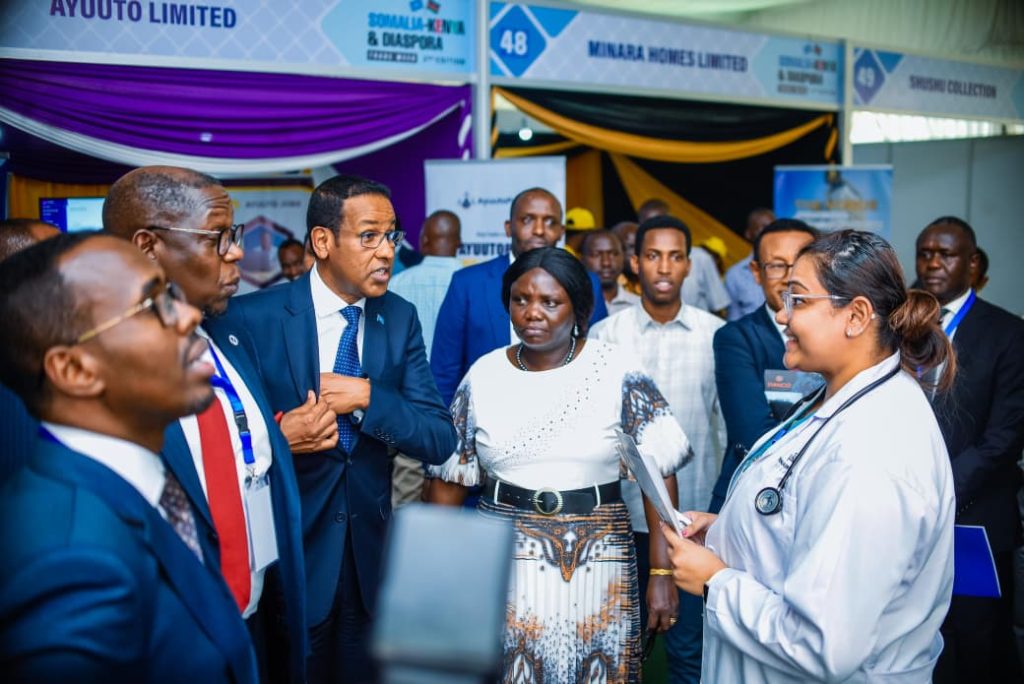
The second edition of the Somalia–Kenya & Diaspora Trade Week took place on 12–13 February 2026 at BBS Mall in Eastleigh, Nairobi, bringing together entrepreneurs, investors, policymakers and community organisations to deepen commercial ties between Kenya and Somalia.
The event, themed “Building Partnerships and Promoting Entrepreneurship Across Borders”, celebrated the growing economic relationship since Somalia’s entry into the East African Community (EAC) and showcased opportunities in trade, services and social development.
The week was officially opened by Beatrice Askul, Kenya’s Cabinet Secretary for EAC and Regional Development, who said that enhanced regional integration and diaspora capital are key drivers of the current uptick in commerce.
“Kenya and Somalia share deep commercial, social and cultural ties, rooted in centuries of trade across the Indian Ocean,” Askul said, stressing that harmonised trade rules and regional value chains offer mutual gains.
Somalia’s Minister of Commerce and Industry, Gamal Mohamed Hassan, spoke of reforms in Somalia that are improving the business climate and attracting private investment. Business delegates at the forum noted expanded export and import activity, with data indicating that Kenya’s exports to Somalia grew significantly between 2020 and 2023, while Somali purchases of Kenyan goods reached billions in recent quarters.
This year’s Trade Week widened participation to include service sectors such as health, education and technology — a first for the two-day forum. Among these was The Nairobi West Hospital, which set up an information stand to share insights on health’s role in supporting economic productivity.
At the event, Susan Wakaruigi, Head of Nursing at The Nairobi West Hospital, highlighted how public health underpins a thriving business environment: “Healthy communities are productive communities. When workers and entrepreneurs have access to reliable health services, absenteeism falls, and economic participation rises. Good health contributes directly to business resilience.” She added that hospitals and clinics can be partners in workforce development, offering preventive care and emergency support that keep commerce moving.
Wakaruigi also emphasised that trade expos provide platforms for health institutions to interface with business leaders, enabling dialogue on how wellness and enterprise growth can be aligned. “We see health investment as part of economic investment,” she said.
Not all voices at the Trade Week were unreservedly upbeat. Some traders pointed to challenges such as logistics bottlenecks, high transportation costs and lingering risk perceptions around doing business in Somalia. Small and medium-sized enterprises (SMEs) from both countries urged bilateral stakeholders to prioritise trade facilitation and supportive infrastructure at border crossings.
“We’ve seen enthusiasm from investors, but there’s still lingering caution about supply chain costs and regulatory hurdles,” said Ahhmed Sali, a Kenyan exporter who attended the forum. “Efforts to reduce non-tariff barriers and streamline customs procedures will make a real difference.”
Despite challenges, participants underscored the potential of joint ventures, cross-border logistics hubs and digital marketplaces to expand trade. The presence of health organisations like The Nairobi West Hospital suggested a new recognition that economic growth and social services are increasingly interconnected.
Organisers said the 2026 Trade Week drew more SMEs, health providers and educators than last year, signaling broader interest in collaborative projects beyond traditional goods trade. With Somalia’s growing integration into the EAC and a vibrant Somali diaspora in Kenya eager to invest, there was a shared sense that commercial bridges are being rebuilt and strengthened, even as discussions continue on how best to support inclusive prosperity for both countries.




More Stories
Developer’s KSh13 Billion REIT Plan Thrown into Doubt as Court Unpacks Fraud Allegations
Sitoyo Lopokoiyit Joins Absa in Key Pan-African Banking Role
KCB Commits KShs. 227 Million to 2026 Safari Rally