

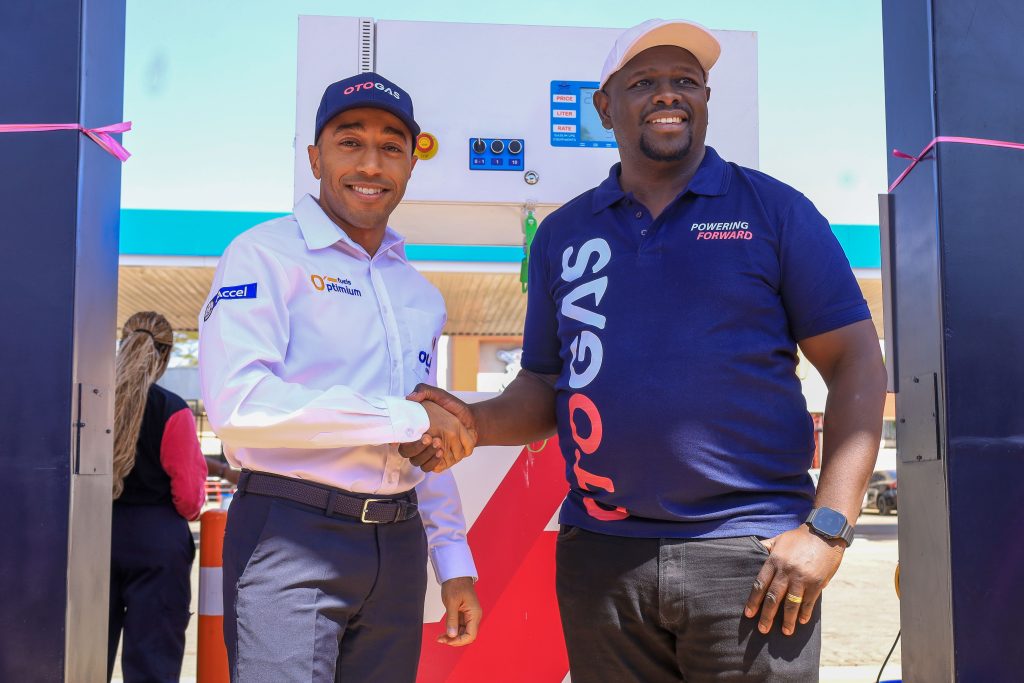
Proto Energy, through its OTO Gas brand, has partnered with OLA Energy to introduce automotive Liquefied Petroleum Gas (LPG) dispensing pumps at an OLA petrol station in Buruburu, Nairobi. The initiative marks the first phase of a broader plan to expand LPG access across multiple locations in Kenya.
The partnership allows vehicles equipped with dual-fuel systems to switch between LPG and conventional fuels, offering drivers potential cost savings and lower emissions. Dual-fuel systems are already widely used globally, where more than 27 million vehicles run on LPG and over 70,000 refueling stations operate worldwide. Studies indicate that LPG produces up to 15–20% lower carbon dioxide emissions than petrol and significantly reduces particulate matter compared to diesel.
In Kenya, transport is a major contributor to urban air pollution, accounting for an estimated 40–45% of emissions in cities, highlighting the potential environmental benefits of cleaner fuel alternatives.
The Buruburu launch is part of a strategy to scale LPG distribution across additional OLA Energy stations. Both companies anticipate interest not only from private motorists but also from fleet operators, logistics companies, and ride-hailing services seeking to lower fuel costs while reducing their environmental footprint.
LPG is already widely used for cooking in Kenya, with about 24–31% of households relying on it as their primary cooking fuel. Experts say this familiarity, coupled with a regulatory framework that supports LPG, provides a solid foundation for expanding its use into the transport sector.
The Kenyan government has set a target to increase LPG penetration to 70% by 2028 under the National LPG Growth Strategy. Observers note that initiatives such as the OTO Gas–OLA Energy partnership could accelerate the adoption of LPG as a practical, lower-emission transport fuel while supporting broader sustainability goals.
Co-locating LPG pumps within existing petrol stations is seen as a cost-effective and scalable model, reducing the need for entirely new infrastructure and making cleaner fuel options more accessible to motorists.
The rollout in Buruburu is the first step in what is expected to be a multi-site expansion aimed at promoting cleaner mobility and reducing transport-related emissions in Kenya’s urban centres.




More Stories
Safaricom Director Honored with Global Social Innovation Award
Youth in Four Counties Receive103.9M NYOTA Start-Up Boost
Optiven Limited Outlines Future Strategic Priorities (2026-2030)