

By Dr William Olwit
Prostate cancer remains a major health concern for men, particularly when the disease spreads beyond the prostate or stops responding to conventional treatments. For some patients, the challenge is no longer simply finding the cancer, but identifying a treatment that can reach cancer cells wherever they have spread in the body.
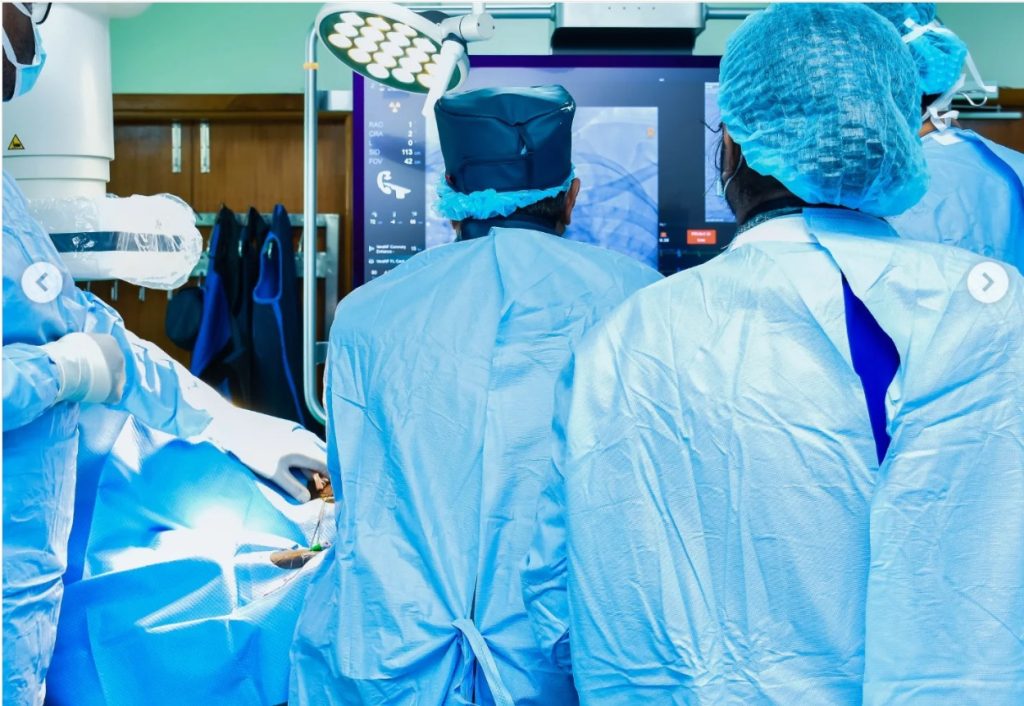
This is where theranostics offers new possibilities. The Nairobi West Hospital has introduced theranostics and Lutetium-177 therapy, expanding the treatment options available to eligible patients with certain advanced cancers, including prostate cancer.
Theranostics combines two approaches: diagnosing disease through specialised imaging and using the results to guide targeted treatment. It represents a shift towards precision medicine, where doctors select treatments based on the specific characteristics of a patient’s cancer.
Prostate cancer begins in the prostate gland, located below the bladder in men. While some forms grow slowly, others can spread to the bones, lymph nodes and other organs. Treatment may involve surgery, radiotherapy, hormone therapy or chemotherapy, depending on the stage and nature of the disease.
However, some cancers continue progressing despite treatment that lowers testosterone, a hormone that can fuel their growth. This condition is known as castration-resistant prostate cancer. When it spreads to other parts of the body, it is called metastatic castration-resistant prostate cancer.
For selected patients in this category, Lutetium-177 therapy offers another option.
The treatment targets a protein called prostate-specific membrane antigen (PSMA), which is found in high amounts on the surface of many prostate cancer cells. Doctors first perform a specialised positron emission tomography (PET) scan using a radioactive tracer that attaches to PSMA. The scan helps reveal where the cancer is located and whether its cells carry enough of the target for treatment to be considered.
If the results are suitable, the patient may receive Lutetium-177 PSMA therapy. The treatment uses a molecule designed to find PSMA on cancer cells and carry a radioactive substance directly to them.
Once attached, the molecule delivers radiation over a short distance, damaging the cancer cells and limiting their ability to survive and multiply. The aim is to concentrate treatment around cancer cells while reducing exposure to surrounding healthy tissue. However, side effects remain possible because some healthy organs may also be affected.
In simple terms, the approach works like a guided delivery system. Rather than relying entirely on radiation directed from outside the body, doctors use a molecule to carry radiation towards cancer cells with a specific biological target.
This can be particularly useful when prostate cancer has spread to several parts of the body, making treatment directed at a single location insufficient.
Nevertheless, Lutetium-177 therapy is not suitable for every patient. Its established use includes selected patients with advanced, PSMA-positive prostate cancer, particularly metastatic castration-resistant disease. Eligibility depends on imaging results, previous treatments, kidney function, blood counts and overall health.
The treatment is not generally intended as a first-line option for newly diagnosed, localised prostate cancer, where surgery or radiotherapy may offer effective treatment.
Nor is it a guaranteed cure. For suitable patients, it can help delay disease progression, reduce cancer-related symptoms and extend the period during which the disease remains under control. Possible side effects include fatigue, dry mouth, nausea and reduced blood cell counts, making specialist supervision and follow-up essential.
The introduction of theranostics at The Nairobi West Hospital is an encouraging development for Kenya’s cancer care landscape. Access to specialised therapies can be challenging, and some patients may otherwise consider travelling abroad to explore treatment options. Local availability may help reduce that burden for eligible patients, although affordability and access remain important considerations.
The priority now should be ensuring that patients and referring doctors understand who may benefit, how the treatment fits into existing care plans and what it costs.
Ultimately, the promise of theranostics lies in making cancer treatment more precise. For men living with advanced prostate cancer, the availability of Lutetium-177 therapy creates another avenue to explore with their specialists, bringing new possibilities without overstating what the treatment can achieve.
The writer is Consultant Radiologist and Theranostics Specialist, The Nairobi West Hospital



More Stories
Fredrick Seda: How Kenya Could Transform Digital Education Worldwide
Kindiki’s War on Illicit Alcohol Opens Another Political Front in Mt Kenya
El Niño Is Coming: Protect Your Home, Health and Travel Before the Storm Hits