


Leaders from across Kenya’s digital ecosystem have called for stronger cybersecurity measures and responsible artificial intelligence (AI) adoption as emerging technologies reshape the country’s digital landscape and introduce increasingly sophisticated cyber threats.
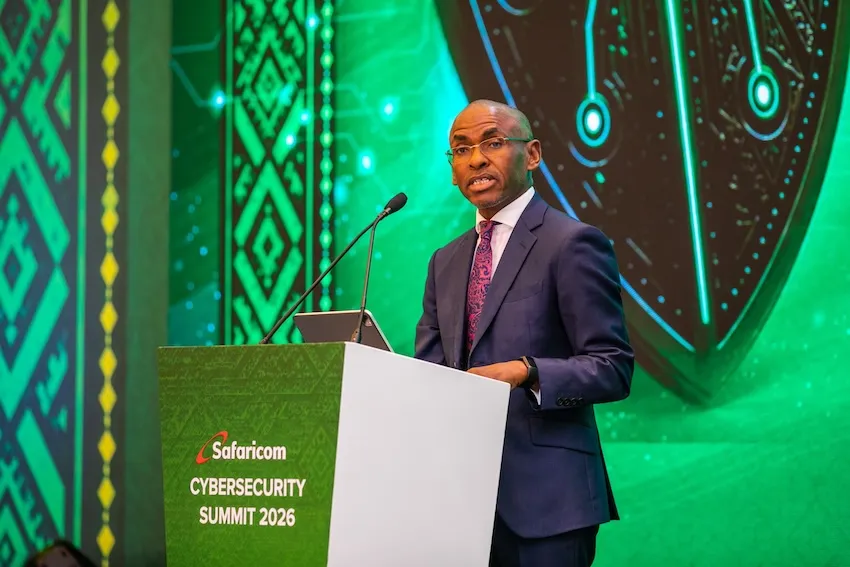
The call was made at the fourth annual Safaricom Cybersecurity Summit, held under the theme “Harnessing AI, Strengthening Security,” which brought together industry leaders and stakeholders to explore how AI can strengthen digital defences while addressing risks such as deepfakes, AI-generated impersonation, automated scams and ransomware.
In addition, the summit comes amid a sharp rise in Kenya’s exposure to cyber threats. According to the Communications Authority of Kenya, the National Kenya Computer Incident Response Team Coordination Centre detected 11.12 billion cyber threat events in the last financial year.
This marks a 29 per cent increase from 8.62 billion in the previous year. The figures underscore the need for continuous monitoring, stronger security controls and coordinated incident response.
Speaking at the summit, Safaricom Group CEO Peter Ndegwa said the opportunities presented by AI must be matched by stronger safeguards, with trust embedded in digital services from the outset.
“AI is expanding what is possible for businesses and society, but that opportunity must be built on trust. Cybersecurity can no longer be treated as a technical safeguard added after a service is developed.
“It must be embedded from the start and strengthened through shared standards, responsible innovation and collaboration across sectors. That is how we ensure digital progress remains safe, inclusive and worthy of our customers’ confidence.” Said Ndegwa.
Turning AI Innovation into Practical Cybersecurity Solutions
Through expert discussions, live demonstrations and practical scenarios, participants examined how organizations can apply AI-enabled threat detection, strengthen incident response, prepare for ransomware and address the cybersecurity skills gap.
Beyond adopting new technologies, the sessions emphasized that effective cyber resilience also depends on tested processes, clear accountability and a strong security-aware culture.
Organizations also need to be equipped to recognize unusual activity, verify high-risk requests and respond decisively to emerging threats.
As Kenya accelerates its digital transformation and adoption of emerging technologies, Safaricom reaffirmed its commitment to securing digital infrastructure and strengthening the country’s cyber resilience.
This commitment is particularly important for micro, small and medium enterprises (MSMEs), which account for about 70 per cent of the country’s GDP.

Strengthening Cybersecurity for MSMEs
By helping MSMEs protect their operations, customer data and digital transactions, Safaricom is enabling them to adopt technology with confidence, remain competitive and recover more quickly from cyber incidents.
To support these efforts, Safaricom supports this through its Software-Defined Wide Area Network (SD-WAN), which provides secure, reliable and centrally managed connectivity across multiple business locations,
In addition, its Managed Security Operations Centre (MSOC), which delivers continuous threat monitoring, expert analysis and coordinated incident responses.
Together, these solutions give MSMEs access to enterprise-grade security without requiring them to build and manage complex cybersecurity capabilities in-house.
Now in its fourth year, the Safaricom Cybersecurity Summit has become a leading platform for industry dialogue, knowledge sharing and collaboration in Kenya.
This year’s edition further reinforced the need to match the promise of artificial intelligence with robust governance, security and trust as the digital economy evolves.




More Stories
Kenya Pipeline Company Profit Rises 8% to KSh17.54 Billion in 2026
How to Replace a Lost National ID in Kenya: Requirements, Fees and Steps
Kenya’s shrinking apartments drive demand for space-saving home appliances