

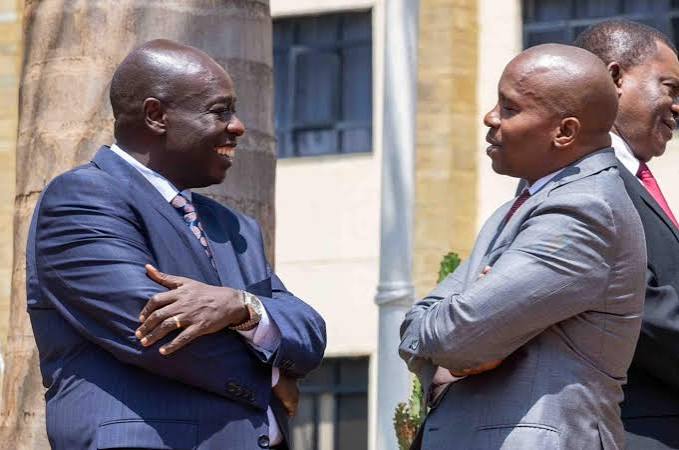
Deputy President Kithure Kindiki has opened a new political front in Mt Kenya, seeking to challenge former Deputy President Rigathi Gachagua’s “Wantam” politics by placing regional unity, development and the authority of elders at the centre of his growing mobilisation.
The strategy became more pronounced following a gathering at Kirigiti Stadium in Kiambu County, where elders drawn from the Gikuyu, Embu, Mbeere and Meru communities endorsed Kindiki as spokesperson and representative of the wider Mt Kenya region.
The endorsement has added a new dimension to the political contest between Kindiki and Gachagua, with both leaders seeking influence over the same constituency but advancing different interpretations of what regional unity should mean.
For Gachagua, the “Wantam” message has remained central to his mobilisation against President William Ruto’s 2027 re-election bid. He has repeatedly called for the Mountain to remain politically united and resisted attempts to divide it into Mt Kenya East and West.
Kindiki, however, is seeking to challenge that narrative without directly adopting the same political language.
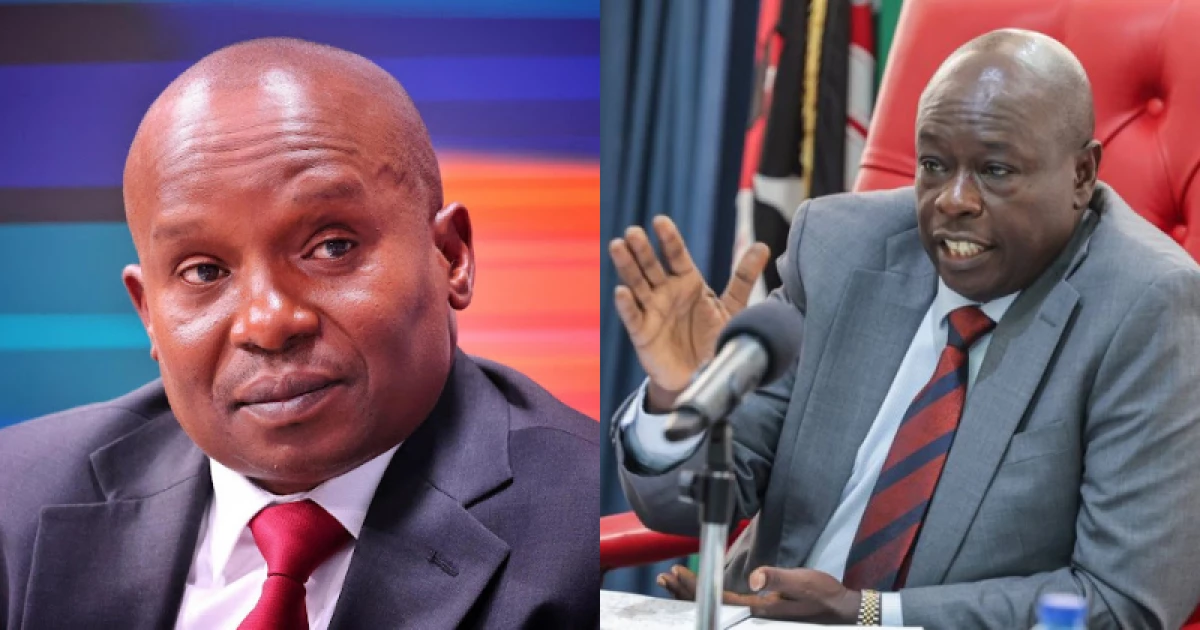
Instead, he has embarked on a campaign centred on unity, development and engagement with elders, presenting himself as a link between Mt Kenya and the national government.
Following the Kirigiti meeting, Kindiki travelled to Tharaka Nithi and later Meru, where he called for regional unity and cautioned leaders against allowing political differences to divide communities with shared interests.
The Standard reported that Kindiki said elders had instructed him to stop responding to political opponents and instead focus on uniting the region and pursuing development.
His message in Meru was more direct as he challenged the “Wantam” slogan and questioned whether political slogans were addressing the economic concerns of residents.
“All they shout is wantam, Kasongo or soprano and other useless slogans,” Kindiki said, according to KBC, before pointing to roads, markets, housing, education and electricity projects as issues that should dominate the political debate.
The remarks point to a broader shift in the political contest.
Rather than allowing Gachagua to define the debate around whether Mt Kenya will support or reject Ruto, Kindiki is seeking to shift attention towards what the region stands to gain from the government.
That approach has been reflected in his increasing engagements across the Mountain, including meetings with elders, church leaders, business people and grassroots networks.
Kindiki has held a series of meetings in both Mt Kenya East and West as he seeks to rebuild the government’s relationship with a region where UDA’s support has faced political challenges since Gachagua’s fallout with Ruto.
The Kirigiti endorsement has provided the campaign with a powerful political symbol.
The elders not only endorsed Kindiki but also rejected attempts to promote an East-West split. Public Service Cabinet Secretary Geoffrey Ruku, who had previously been associated with the Mt Kenya East campaign, returned an axe that had symbolised division and received a flywhisk as part of the reconciliation process.
For Kindiki, the symbolism reinforces his argument that the Mountain should remain politically united.
But the political contest is also about who has the authority to define that unity.
Gachagua has questioned the legitimacy of the Kirigiti gathering and dismissed the endorsement. He has also seized on the incident in which Kindiki’s traditional headgear fell during the ceremony to ridicule the attempt to install him as the region’s spokesperson.
The former Deputy President has continued to use the Mugumo tree analogy in arguing that attempts to divide Mt Kenya will not succeed.
The Kirigiti endorsement has also faced criticism from some elected leaders in Mt Kenya West.
Juja MP George Koimburi and Ndia MP George Kariuki have questioned the process, arguing that elected leaders and local communities should have been consulted before a figure could be presented as the region’s spokesperson.
The disagreement exposes one of the central questions in the emerging political contest: who has the authority to speak for Mt Kenya?
For Gachagua’s allies, endorsement by elders does not necessarily translate into grassroots political support. For Kindiki, however, the backing gives him a platform from which to build a parallel political network across the region.
Political analyst Edwin Mwangi has described the Kirigiti development as a new battle line between Gachagua and Kindiki.
According to Mwangi , Gachagua has positioned himself as a leader of the Mountain, while Kindiki has gained ground within the government camp through the elders’ endorsement.
Mwangi has, however, pointed to complications surrounding the endorsement, noting that former Cabinet Secretary Justin Muturi had previously been declared a regional spokesperson and that there had been no formal handover of the traditional leadership symbol.
The Kirigiti meeting therefore does not conclusively settle the question of political leadership in Mt Kenya.
Instead, it adds another layer to an increasingly crowded contest for influence in the region.
Kindiki’s approach is noticeably different from Gachagua’s.
While Gachagua’s political messaging has focused heavily on resistance, bargaining power and the “Wantam” slogan, Kindiki is increasingly emphasising roads, markets, electricity, education and other government programmes.
In Meru, he highlighted a KSh39 billion development programme involving roads, markets and education infrastructure, while challenging his opponents to explain what they would offer residents beyond political slogans.
That is the political battlefield Kindiki appears to be constructing.
Rather than attempting to counter “Wantam” with another slogan, he is seeking to shift the conversation towards development, government programmes and the potential benefits of maintaining a working relationship with the administration.
The emerging contest is therefore about more than Kindiki and Gachagua.
It is increasingly a battle over who gets to define Mt Kenya unity, who speaks for the region and whether political unity necessarily translates into support for a particular candidate.
More Stories
Willstone Homes Boss Ejidio Kinyanjui Faces Rape Trial
Kenya calls for stronger after-sales support as WHX Nairobi attracts 250 healthcare firms
Kenya secures US$229m for forests as Africa steps up push for green finance