

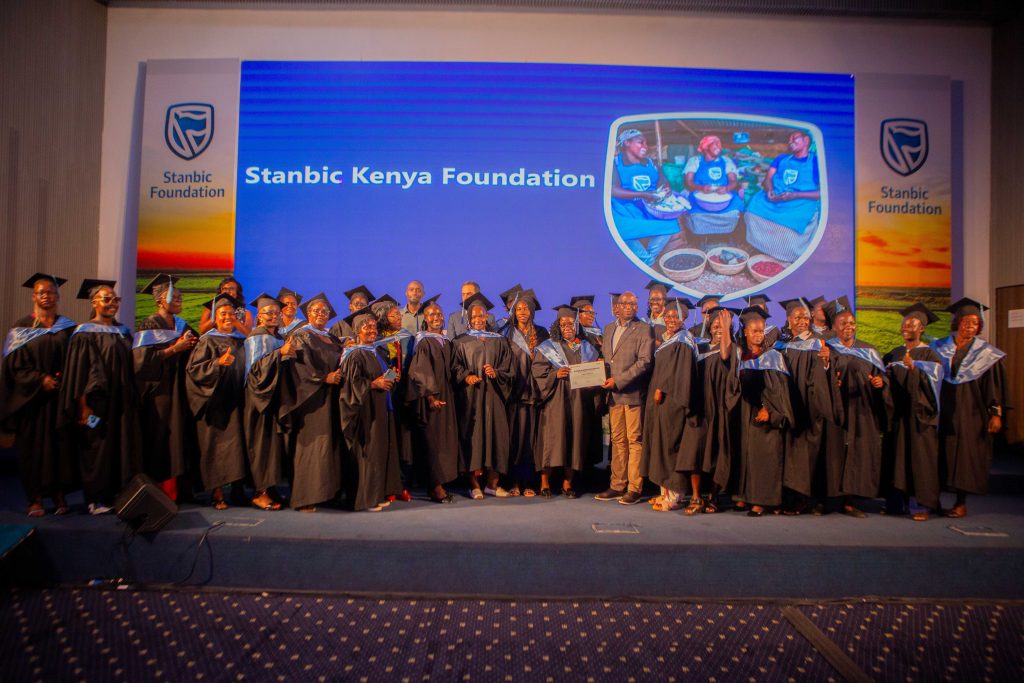
Stanbic Kenya Foundation, in partnership with the Deutsche Gesellschaft für Internationale Zusammenarbeit (GIZ), has celebrated the graduation of 351 entrepreneurs from the Women Employment for the Green Transformation (WE4D) programme. The initiative supports enterprise growth, job creation and an inclusive green economy across Western Kenya.
The graduating entrepreneurs come from ten counties: Kisumu, Kericho, Kisii, Nyamira, Homa Bay, Uasin Gishu, Bungoma, Busia, Kakamega and Vihiga.
The programme’s wider enterprise support has reached 706 business owners and strengthened businesses that collectively support 2,378 jobs, including those held by 1,591 young people and 32 persons with disabilities.
“This programme demonstrates how entrepreneurship can become a practical engine for sustainable development. By helping women- and youth-led businesses raise productivity, adopt climate-conscious practices and become investment-ready, we are supporting decent jobs, stronger local value chains and more resilient county economies.
As these enterprises grow and access wider markets, their impact will extend beyond their communities and contribute to Kenya’s long-term economic transformation,” said Michael Mutiga, Chief Executive, Stanbic Bank Kenya and South Sudan.
Across Kenya, women, young people and entrepreneurs are building businesses, creating jobs and driving growth. At Stanbic Kenya Foundation, we help create the conditions for them to succeed through economic empowerment, financial and digital inclusion, and climate resilience.
As we celebrate this graduation, our focus now is on helping SMEs access markets, financing, technical expertise and growth opportunities.
By working with partners, county governments and Stanbic Bank teams, we aim to help businesses scale sustainably, create jobs and contribute to stronger communities.” said Mercy Githanji, Executive Director and Head, Stanbic Foundation.
Agriculture and agro-processing accounted for the largest share of enterprises in the cohort, alongside ventures in aquaculture, circular economy, manufacturing, sustainable tourism and natural health solutions. The graduation recognises entrepreneurs who have applied practical business capabilities to strengthen their operations, expand market opportunities and create employment within their communities.
Commissioned by the German Federal Ministry for Economic Cooperation and Development (BMZ) and co-funded by the European Union (EU) and the Norwegian Government, the programme supports small and medium-sized enterprises to build stronger, greener and more inclusive businesses.
In Kenya, WE4D combines capacity building, access to formal finance, market linkages and support for green job creation to help enterprises move from survival to sustainable growth. By scaling support across counties and sectors, the programme advances national priorities including MSME competitiveness, women’s and youth economic participation, decent employment, responsible production, climate resilience and a just transition to a greener economy. Its partnership model shows how government, development partners and the
private sector can turn locally rooted enterprise solutions into wider social, economic and environmental value for Kenya.
WE4D by the numbers
The programme’s impact includes:
- 351 entrepreneurs supported across 10 counties;
- 85% women participants;
- 706 business owners reached;
- 2,378 jobs supported, including 1,591 youth and 32 persons with disabilities; and
- Agriculture and agro-processing as the largest sector represented.
Entrepreneurs report stronger businesses and new opportunities
Across the graduating cohort, entrepreneurs reported stronger business formalisation through improved record keeping, governance, staff management, contracting and compliance.
Participants also gained new customers, supply contracts, export opportunities and linkages to industry stakeholders.
Beneficiaries further cited improved business planning, better financial management, enhanced strategic thinking and greater confidence in pursuing larger commercial opportunities.
Several enterprises expanded operations and created jobs, while others advanced innovations in waste valorisation, climate-smart agriculture, value addition, sustainable tourism and natural health solutions.

More Stories
Looking for Media or ICT Attachment in Kenya? Here Is Where to Start
Trust Summit: Mudavadi Calls for Accountability, Fairer Global Institutions to Rebuild Public Confidence
Global Trust Summit: Leaders Call for Accountability and Transparency