

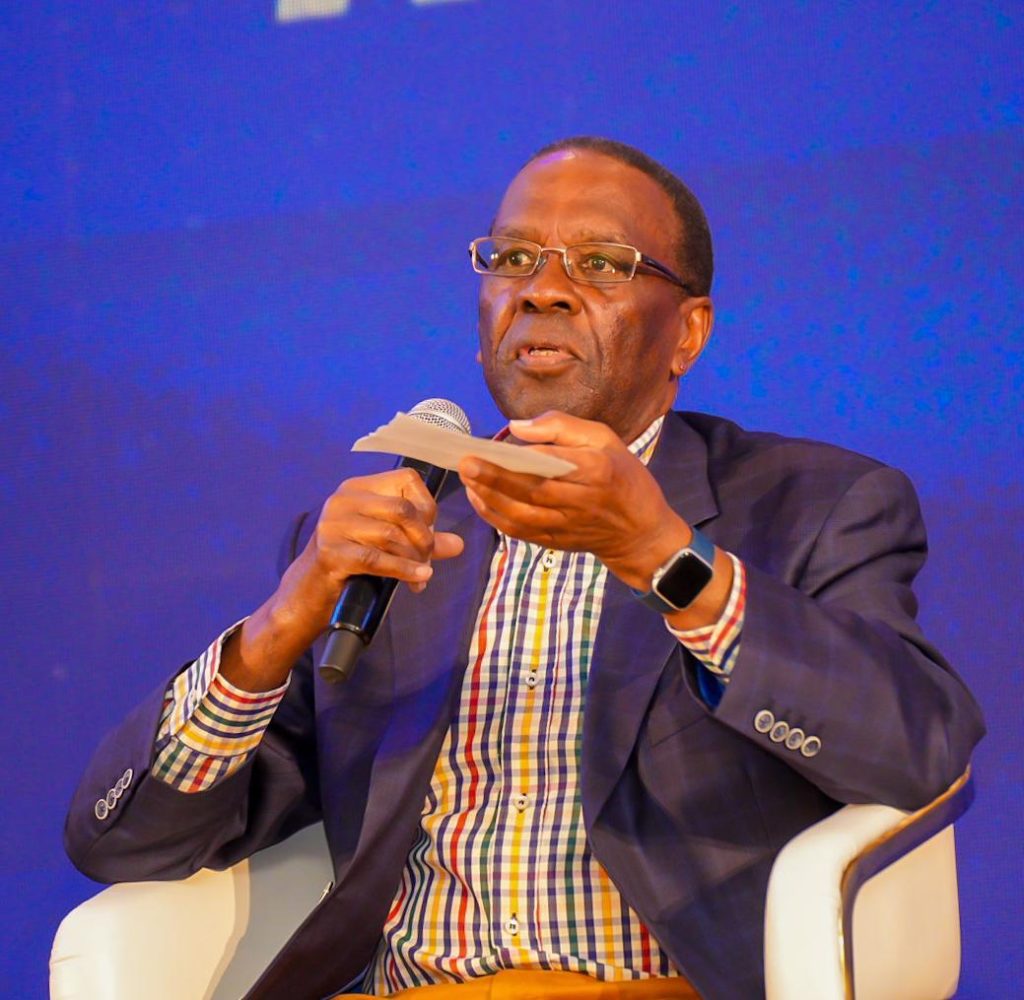
Democratic participation, constitutional accountability and access to information emerged as central themes on the opening day of the Global Trust Summit, with speakers warning that public confidence depends on whether institutions translate democratic principles into meaningful change.
Justice (Rtd) Dr Willy Mutunga, Chief Justice Emeritus and a representative of Katiba Institute, said Kenya’s progressive Constitution could not fulfil its promise if those entrusted with implementing it treated its provisions as inconvenient.
“Our Constitution is very progressive. But as long as those who are in power find it inconvenient, they are not willing to breathe life into it, and that includes institutions themselves,” he said.
The remarks placed the focus on the gap between constitutional guarantees and the everyday experience of citizens, raising questions about whether public institutions are sufficiently committed to implementing the principles of participation, transparency and accountability.
Dr Andrews of International IDEA, standing in for Gram Matenga, argued that rebuilding trust required more than improved public communication.
“It is not just about messaging; it’s also about change of process, change of people and change of direction,” he said.
His remarks reinforced the argument that trust cannot be restored through communication campaigns alone. Institutions must also examine how they make decisions, how they respond to citizens and whether their practices reflect the principles they publicly uphold.
Sheila Masinde, Executive Director of Transparency International Kenya, said greater openness could help prevent disputes and reduce the need for citizens to resort to litigation to obtain information.
“We don’t have to go to court if access to information is given more proactively,” she said.
Masinde had earlier stressed that public participation should not be treated as a nuisance by leaders, noting that citizens expect elected officials to deliver on the mandates entrusted to them.
“When I vote for you, I trust that you will deliver in the mandate you are seeking,” she said.
Caroline Gaita, Executive Director of Mzalendo Trust, cautioned that participation without a mechanism for responding to citizens risks becoming a symbolic exercise.
“Participation without a feedback loop is not engagement; it’s attendance,” she said.
Charles Owino, the Government Spokesperson, said democracy should serve the public good and that democratic power ultimately rests with citizens. Duncan Ojwang’, chairperson of the Independent Policing Oversight Authority, called for public participation that is universal rather than dominated by the loudest voices.
Clarise Ogangah, chairperson of the Kenya National Commission on Human Rights, added that citizens do not surrender all their power when they elect leaders; they continue to exercise it through public participation.
Together, the interventions underscored the importance of making democratic processes accessible, responsive and consequential, so that citizens can see how their contributions influence public decisions.
Trust is earned through action
The summit also examined how leaders and institutions can rebuild confidence in environments where citizens question whether public promises will be honoured.
H.E. Dr Irungu Kang’ata, Governor of Murang’a County, said institutions must demonstrate their credibility through their actions rather than rely on statements of intent.
“In terms of trust, you gain it by demonstrating, not by illustrating,” he said.
The distinction speaks to a central challenge for public institutions: citizens judge them by the consistency between what they say and what they do, including the quality of public services, their handling of complaints and their willingness to account for decisions.
Erastus Edung Ethekon, HSC, Chairperson of the Independent Electoral and Boundaries Commission, offered a different perspective on the relationship between trust and institutional change.
“Sometimes when there’s distrust, that’s when we actually achieve positive change or transformation,” he said.
His remarks suggested that distrust, while challenging, can also prompt institutions to confront shortcomings, review established practices and pursue reforms that might otherwise be delayed.
The discussions on institutional accountability echoed the views of Auditor-General Nancy Gathungu, who said trust is built through credible, useful information and action along the accountability chain.
Dr Priscilla, Director of the Communications Authority of Kenya, said accountability could not rest with one organisation alone.
“Trust does not stop with complaints. It stops when the complaint has been resolved,” she said, warning that repeated complaints risk deepening mistrust.
Felix Koskei, Chief of Staff and Head of the Public Service, emphasised that institutions must practise the standards they expect others to follow.
“A regulator that demands compliance from others must be an example of compliance,” he said.
The common message was that trust requires institutions to provide credible information, acknowledge shortcomings, resolve grievances and demonstrate measurable improvements.
Who gets the resources — and who has a seat at the table?
The question of trust also extends to the distribution of resources and the representation of communities in decisions that shape their economic and social prospects.
Margaret Mliwa, Regional Director for East Africa at the Ford Foundation, framed the issue around the relationship between power, resources and participation.
“The question is who gets the resources, resources for whom, and who is at the table,” she said.
Her remarks broadened the debate beyond the transparency of institutions to consider who benefits from public and development financing, whose priorities shape spending decisions and whether historically excluded communities have a meaningful voice in determining how resources are allocated.
The issue is particularly relevant to debates about inclusive development, economic opportunity and international cooperation, where commitments to equality must be matched by decisions about funding, representation and access.
Clare Akamanzi, chief executive of NBA Africa, similarly emphasised the importance of evidence and delivery in sustaining confidence.
“Announcements are not enough. Do the public believe you will deliver on the promises made to them,” she said.
She added that communicating intent and sharing evidence are important to making delivery credible.
Venture capitalist and startup builder Sean Karanja highlighted the importance of integrity in the relationship between capital and enterprise.
“I want to deploy truthful capital to truthful entrepreneurs,” he said.
These perspectives reflect the summit’s broader examination of trust as both a governance and an economic issue: confidence is shaped by whether institutions and markets operate transparently, whether commitments are fulfilled and whether opportunities are accessible to those they are intended to serve.
As the summit continues, participants are examining how democratic agency, institutional accountability and fairer resource allocation can contribute to a more trusted relationship between citizens, governments, businesses and international institutions.
The challenge is to move from declarations of inclusion to practical changes in how decisions are made, resources are distributed and public commitments are monitored.
The ultimate test of trust, speakers argued, is whether institutions demonstrate through their conduct that citizens’ voices matter and their legitimate expectations will be met.



More Stories
Quickmart IPO: Key Dates, Share Price and How Kenyans Can Invest Through M-PESA
Big 5 Construct Kenya opens in Nairobi, addressing the needs of Kenya’s burgeoning construction sector
Kenya Courts Global Manufacturers to Build Regional Construction Supply Hub