

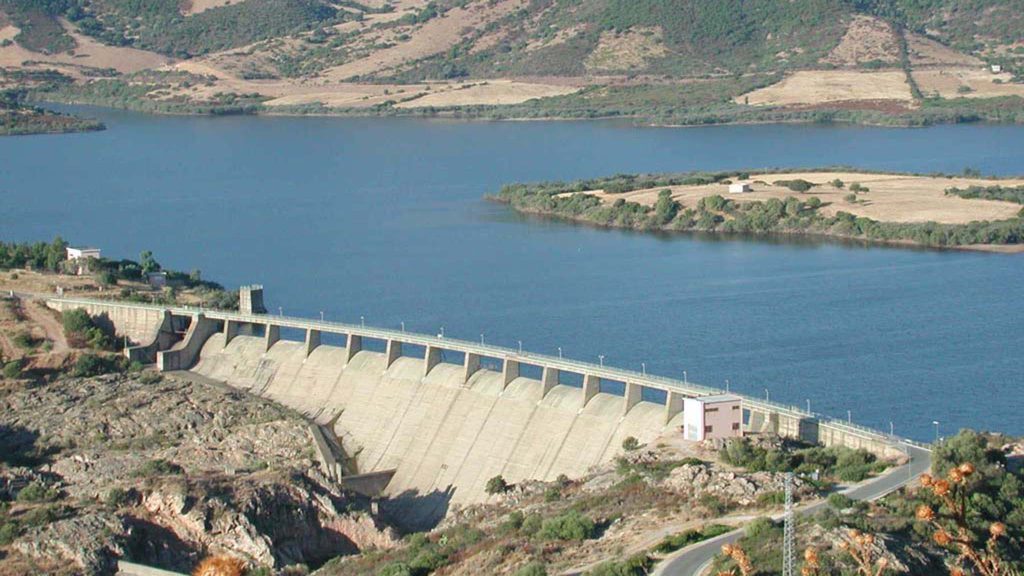
Kenya is banking on the Sh100 billion Thwake Multipurpose Dam to unlock a new agricultural economy in Lower Eastern, with the project nearing completion after years of delays and funding challenges.
The dam, which is now 94.2 per cent complete, is expected to begin impounding water in April 2027, paving the way for a major expansion of irrigation, commercial farming and water supply in Makueni, Kitui and parts of Machakos counties.
The investment is expected to provide a critical economic lifeline to a region where unreliable rainfall has constrained agricultural production, limited business opportunities and exposed households to recurrent droughts.
Beyond supplying water to an estimated 1.3 million people, the project is designed to support irrigation across 40,000 hectares of farmland, creating opportunities for commercial agriculture, agro-processing, storage, transport and agricultural exports.
Principal Secretary for Water and Sanitation Julius Korir told the National Assembly Departmental Committee on Blue Economy, Water and Irrigation that construction had reached 94.2 per cent, with the remaining works being accelerated to meet the April 2027 water impoundment target.
The project’s completion is expected to mark a major milestone in the government’s efforts to address water shortages and stimulate economic activity in the Lower Eastern region.
Martin Kimeu, a resident of Wote, said inadequate water infrastructure had for decades prevented farmers from exploiting the region’s agricultural potential.
“Ukambani is fertile. Water has been the biggest impediment to the realization of our agricultural potential. Thwake Dam water is the clear solution to this,” he said.
“Let us keep petty politics off this intergenerational project. I have been following up on its construction since inception. I can proudly say that everything is above board, from the compensation exercise to construction.”
The dam’s irrigation component is expected to be one of its biggest economic drivers, with reliable water supplies potentially allowing farmers to move away from rain-fed agriculture and adopt multiple cropping seasons.
This could support large-scale production of horticultural crops, fruits and other high-value agricultural commodities, while creating demand for agricultural inputs, irrigation equipment, financing, processing facilities and logistics services.
The anticipated expansion of agricultural production could also attract private investment into cold storage, food processing and distribution, helping farmers access larger domestic and export markets.
The project is also expected to supply approximately 150,000 cubic metres of treated water daily to about 1.3 million people in Makueni and Kitui counties and Konza Technopolis in Machakos County.
Reliable water supplies could reduce the cost and time households and businesses spend accessing the commodity while improving the operating environment for industries and commercial enterprises.
The dam, located at the confluence of the Athi and Thwake rivers along the Makueni-Kitui border, has a planned storage capacity of 688 million cubic metres and stands approximately 80.5 metres high.
It is also designed to support a 20-megawatt hydropower generation facility, regulate downstream flows of the Athi River and improve the region’s resilience to drought and flooding.
However, the economic benefits will depend on the government’s ability to complete the supporting infrastructure, particularly the irrigation, water distribution and sanitation components.
The dam’s construction alone will not automatically translate into higher agricultural incomes. Farmers will require financing, irrigation systems, reliable markets and infrastructure to move produce from farms to consumers.
Funding challenges and compensation disputes
The project has experienced years of delays and funding constraints, raising questions about the cost of prolonged implementation and the time it will take for the investment to deliver its anticipated economic returns.
Korir said the government had secured additional financing from the African Development Bank (AfDB) after experiencing cash-flow constraints that threatened implementation.
“In terms of government commitment to completing this dam, it is very evident. When we ran short of cash, we engaged with our development partners, and they allocated additional funding, and this money will now go towards total completion of the project,” he said.
The progress comes amid a dispute involving households that claim construction-related blasting damaged their homes, with residents reporting cracks on walls, windows and foundations, as well as dust, noise and ground vibrations.
In August 2026, residents from villages in Mavindini Ward, operating under the Thwake Dam Blasting-Affected Community Committee, sought an independent review by the AfDB.
The affected households alleged that some properties and community facilities had been damaged during construction, with some residents claiming they were excluded from compensation assessments.
They also demanded access to assessment reports, photographs, measurements, valuation records and repair estimates to establish how compensation decisions were made.
The dispute highlights the social and financial risks facing large infrastructure projects, particularly where construction activities affect communities living around project sites.
An official close to the project said the safety department had invited competitive bids for an independent assessment of properties potentially affected by blasting.
Agile Consulting was subsequently selected to undertake the exercise, which covered affected households within a two-kilometre radius of the construction site.
The official said a report had been submitted to the project implementation team and that a significant proportion of the 330 households assessed were satisfied with the findings.
Ben Mwongela, a director at the consulting agency, said the assessment followed professional procedures and sought to establish whether controlled blasting had caused or contributed to structural defects in surrounding properties.
“The assessment involved reviewing blasting records, vibration data and compliance with regulatory standards,” he said.
The exercise also involved documenting affected households, classifying structural defects and preparing bills of quantities and cost estimates for repairs or reconstruction.
A field assessment report by the AfDB dated October 21, 2026, acknowledged the professionalism and integrity of experts involved in the project.
Led by Nancy Ogal, the bank’s group manager for the project, the AfDB team assessed construction progress, workmanship and compliance with social and environmental safeguards.
The team also interacted with local communities and advised households with outstanding grievances to follow established procedures to resolve their complaints.
Jacob Mwanzia, a resident of Madangi Village, questioned the campaign against the dam, arguing that isolated complaints should not derail a project expected to benefit the wider region.
“I was shocked to see a group calling itself the Thwake Dam Blasting-Affected Community Committee peddling what I consider misinformation to the media,” he said.
“Those are self-serving individuals blinded by cheap politics. My home is closer to the project. Most people in my area were well compensated and are satisfied.”
His neighbour, Mariam Mwikali, said property assessments had been conducted and residents given an opportunity to raise concerns.
“I was horrified to see a few people peddling allegations against the project on television,” she said.
The competing positions underline the challenge facing the government as it pushes to complete the dam while addressing concerns from households affected by construction.
Beyond water supply
Thwake Dam is a flagship project under Kenya Vision 2030 and is expected to support several economic activities through its four implementation phases.
The first phase involves construction of the dam and associated infrastructure, while subsequent phases will focus on hydropower generation, water supply and sanitation infrastructure, and irrigation development.
Its success will ultimately depend on how effectively the government connects the water resource to productive economic activities.
For farmers, access to reliable irrigation could reduce losses associated with failed rainy seasons and make it easier to plan production and enter into commercial supply agreements.
For businesses, the project could create opportunities across agricultural value chains, including food processing, warehousing, transportation and export distribution.
The supply of water to Konza Technopolis could also strengthen the attractiveness of the technology city to investors seeking reliable infrastructure for commercial and industrial operations.
However, translating the investment into sustainable economic growth will require additional public and private capital to develop the infrastructure and services needed to support farming and industrial activity.
With construction nearing completion, the focus is shifting from building the dam to ensuring that the Sh100 billion investment delivers the promised economic transformation for Lower Eastern Kenya.



More Stories
Co-op Bank to Finance Electric Matatus and PSV Fleets in Kenya
KCB Champions Sustainable Finance to Green Kenya’s Education Sector at COP31
Kingdom Bank Profit Before Tax Surges 61.8% to KSh1.33 Billion