

By Christine Gitonga
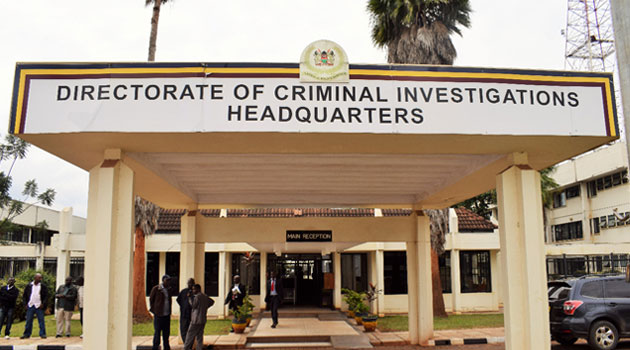
In a move aimed at protecting victims from exploitation, the Directorate of Criminal Investigations (DCI) has stepped up efforts to disrupt human trafficking networks across Kenya and beyond.
As criminals continue to develop new ways of recruiting, transporting, and exploiting victims, human trafficking has emerged as a major concern for security agencies. The networks often operate across several countries, making investigations more complex and challenging.

Identifying individuals and groups involved in trafficking, as well as gathering evidence that can support their prosecution, has become a priority for the DCI. Investigators are also required to strengthen the exchange of information between local, national, and international law enforcement agencies.
People who are poor, unemployed, or lack economic opportunities are often targeted by traffickers. Victims may be deceived with promises of better living conditions, jobs, or education before being transported to places where they are exploited.
In some cases, victims are subjected to domestic servitude, forced labour, sexual exploitation, or other forms of abuse. Others may be harassed and threatened, while their identification documents are confiscated, preventing them from seeking help or escaping their situation.
This makes cooperation between law enforcement agencies extremely important, as human trafficking frequently occurs across borders. For instance, a victim may be recruited in one country, transported through another, and exploited in a third. Investigators must therefore work together to identify suspects and understand how the trafficking operations are organised.
The DCI can also work closely with prosecutors, border control agencies, immigration authorities, and organisations that support victims. Such collaboration can strengthen investigations into trafficking syndicates while helping authorities identify suspicious activities.
Technology has also changed the way traffickers operate. Criminal syndicates may use social media to communicate with potential victims and advertise fake job opportunities.
Another key element in dismantling human trafficking networks is financial investigation. Individuals who finance or financially benefit from trafficking can be identified by tracing the sources and movement of funds linked to the criminal activities.
However, addressing human trafficking requires more than simply arresting criminals. Victims also need support after being rescued. They may be traumatised, frightened, and uncertain about their future. With the help of shelters, counselling, medical care, and legal assistance, victims can begin to recover and, where necessary, participate in investigations.
Increased public awareness is also crucial in the fight against human trafficking. People should be cautious about suspicious job offers, recruiters, and travel arrangements. Reporting suspected trafficking activities to the relevant authorities can help investigators intervene before more people fall victim to traffickers.
Because traffickers increasingly use social media to communicate with potential victims, young people are particularly vulnerable to online recruitment. Awareness campaigns can help young people recognise common warning signs and verify job and travel opportunities before accepting them.
Cooperation with neighbouring countries is also essential because Kenya is a major hub for regional transportation and economic activities. Criminal networks can exploit busy airports, border crossings, roads, and other transport routes to move victims from one location to another.
It is not enough for investigators to rescue victims from situations of exploitation. Authorities must also identify those involved in financing, recruiting, transporting, and exploiting victims in order to dismantle the entire network.
The measures being taken by the DCI highlight the need to treat human trafficking as organised crime rather than as an isolated offence. Disrupting the entire network can make it more difficult for traffickers to replace arrested members and continue their operations.
Strong cases supported by sound evidence are equally important for successful prosecutions. Collaboration between investigators and prosecutors can help ensure that evidence is properly collected, preserved, and presented in court.
Law enforcement agencies will need to continually strengthen their investigative techniques and build partnerships beyond Kenya as trafficking networks become increasingly sophisticated.
The increased efforts by the DCI demonstrate that individuals involved in exploiting vulnerable people are likely to face greater scrutiny. However, sustained collaboration among law enforcement agencies, prosecutors, border authorities, communities, and organisations supporting victims will remain essential.
Measures such as intelligence-led policing, stronger border cooperation, public education, and victim protection will be critical in helping Kenya combat human trafficking and make it increasingly difficult for organised criminal networks to operate.




More Stories
DPP Charges Magistrate Martin Kinyua Mutegi with Receiving Bribe
DPP Charges Eric Achila, Susan Wangari in KSh1.5B PROFIT Fraud Case
DPP Files Extradition Case Against Chinese National Over KSh151M Fraud