

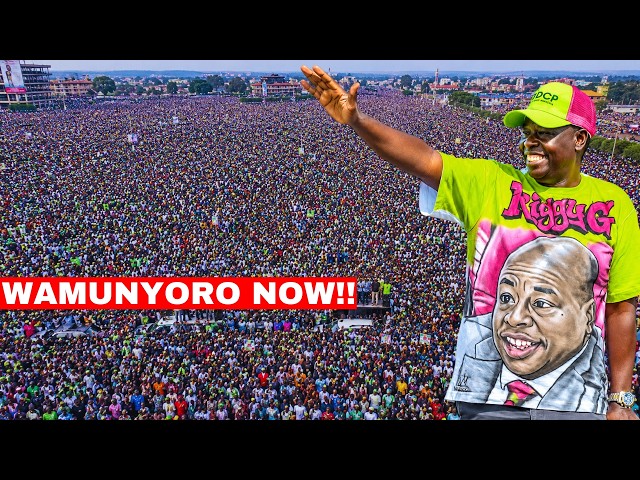
Former Deputy President Rigathi Gachagua’s Wamunyoro residence has increasingly become one of Kenya’s most closely watched political addresses ahead of the 2027 General Election.
The steady stream of politicians, grassroots leaders and political aspirants visiting the residence has drawn comparisons with William Ruto’s Karen home, which became a key political meeting point in the run-up to the 2022 elections.
Although Gachagua has described many of the meetings at Wamunyoro as courtesy calls and consultations, political analysts say the residence is gradually taking on the characteristics of a political command centre.

Political analyst Charles Mwangia says the comparison with Karen is understandable, but cautions against assuming that the two situations will produce the same political outcome.
“People should be careful not to assume history repeats itself simply because leaders are holding meetings in their homes. Karen worked because Ruto had a united coalition behind him. Wamunyoro may be attracting leaders, but the opposition is yet to agree on a single candidate or common strategy,” Mwangi said.
Ruto’s Karen residence became an important political hub after his fallout with former President Uhuru Kenyatta. During that period, Ruto used the political space around Karen to develop his campaign strategy and work on the Kenya Kwanza manifesto ahead of the 2022 election.
Ruto recently recalled that period, saying his political fallout with Uhuru effectively gave him a two-year “leave of absence”, which he used to work on the Kenya Kwanza manifesto.
“I want to thank my predecessor, President Uhuru Kenyatta. He gave me leave of absence for two years. And I used that time to write this manifesto,” Ruto said.
He added that together with his advisers, they developed the document from Karen, with some of its proposals drawing from policies initiated during the Jubilee administration.
Wamunyoro’s growing political traffic
Gachagua appears to be building a similar network of political consultations at Wamunyoro.
On Wednesday, he hosted several sitting Members of County Assembly from Laikipia and Nakuru counties who had defected from parties including UDA and TSP to his Democracy for the Citizens Party (DCP).
“The mass exodus from UDA, TSP, and other wheelbarrow outfits to DCP is gaining momentum, and by December, they will be mere shells. I am pleased to have received 24 sitting MCAs from Laikipia and Nakuru counties, who paid a visit to me at the Wamunyoro residence,” Gachagua said in a statement posted on social media.
Gachagua has also announced that Wamunyoro would remain open for consultations with political leaders and other Kenyans.
“The doors of Wamunyoro are open to everyone who wishes to consult with us on how to liberate our country and restore good governance,” he said.
The residence has recently hosted delegations from several parts of the country.
Earlier this week, Gachagua met a delegation from Nyandarua County following Governor Kiarie Badilisha’s decision to join DCP. He later met DCP aspirants from Nyeri County.
“The DCP Party aspirants of Nyeri County paid a courtesy call on me today at Wamunyoro Residence. As we approach the 2027 polls, I urged the aspirants to remain in sync with the rest of Kenyans and focus on grassroots mobilisation for our party,” Gachagua said.
Is Gachagua copying Ruto?
Gachagua’s allies reject the suggestion that he is simply replicating Ruto’s political strategy.
Gatanga MP Edward Muriu argues that Gachagua was himself one of the architects of the Kenya Kwanza strategy and therefore understands the political mechanics behind building a national movement.
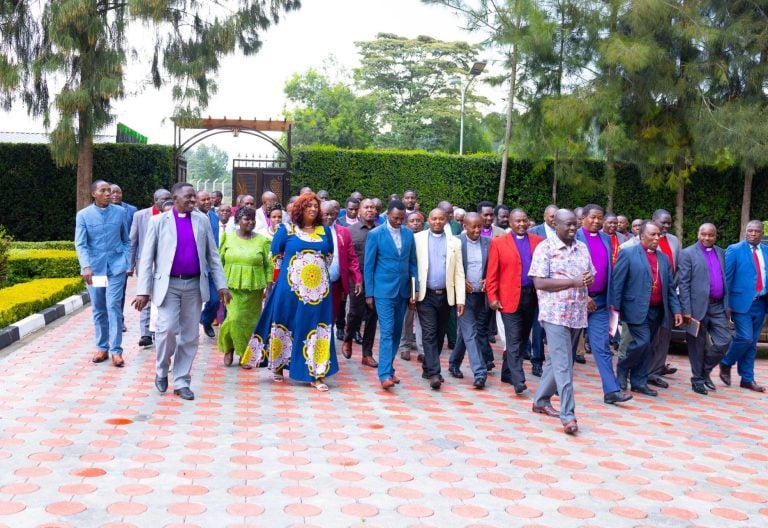
Muriu describes Wamunyoro as a symbolic centre of the “Wantam” movement, arguing that its location in the Mt Kenya region has made it a natural meeting point for leaders seeking political direction.
Kipipiri MP Wanjiku Muhia holds a similar position, saying critics have misunderstood Gachagua’s role in the formation of Kenya Kwanza.
“People saying Gachagua is following Ruto’s script have the story upside down. Gachagua was among the architects of the Kenya Kwanza strategy. What he is doing today is implementing political strategies he understands very well. Wamunyoro has become a home where leaders from across the country freely come to discuss Kenya’s future,” she told The Star.
Political analyst Alexander Nyamboga says Wamunyoro is gradually developing into an alternative political command centre.
“What we are witnessing is the creation of an alternative political command centre. Such places become important because they provide leaders with a consistent venue to receive allies, negotiate political partnerships and project influence. Karen served that role for William Ruto before the 2022 elections, and Wamunyoro appears to be assuming a similar function,” he said.
However, Nyamboga cautions that the real test will not be the number of political visitors but whether the meetings produce tangible political results.
“A political command centre is judged by outcomes, not by the number of visitors. The meetings must eventually produce a united coalition, credible candidates and an agenda capable of attracting national support,” he said.
Different political circumstances
University of Nairobi political scientist Herman Manyora agrees that there are similarities between Karen and Wamunyoro, but says the political circumstances surrounding the two residences are significantly different.
“There are similarities because both became centres of political consultations after their occupants fell out with the governments they served. But by this stage before the 2022 election, Ruto was already the uncontested presidential candidate of Kenya Kwanza and coalition negotiations were at an advanced stage,” Manyora said.
He noted that politicians meeting at Wamunyoro are yet to settle on a single presidential candidate or agree on a common political programme.
Political communication scholar Professor Gitile Naituli says successful political movements can often develop around symbolic locations.
“Political movements require symbolic spaces. Once leaders repeatedly converge in one place, supporters begin associating that location with authority, consultation and decision-making. Eventually the venue itself becomes part of the political brand. That, however, does not automatically translate into electoral victory,” Naituli said.
Former Ruiru MP Esther Gathogo says Gachagua has remained politically active despite leaving government, arguing that the steady flow of delegations to Wamunyoro demonstrates his continued influence.
“He has maintained regular engagement with grassroots leaders and continues attracting delegations from different regions. Whether that translates into electoral success is for Kenyans to decide, but the political activity at Wamunyoro cannot be ignored,” she said.
Political analyst Josphat Kamenya says Wamunyoro is also playing an important role in shaping public perception of Gachagua’s political position.
“Politics is largely about perception. Through regular meetings with aspirants, community groups and political leaders, Gachagua projects himself as a central figure in Mt Kenya politics. Whether that perception reflects actual political strength is something that will only be determined by voters,” Kamenya said.


More Stories
Former Nyeri Town MP Ngunjiri Wambugu Calls for NDC to Choose Uhuru’s Successor
Ngunjiri Wambugu demands NDC to determine Uhuru Kenyatta’s successor
John Mwaura Urges Kiambu Youth to Champion Jobs and Empowerment