

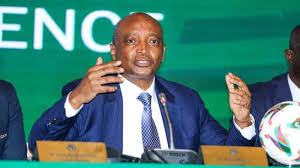
Patrice Motsepe has reaffirmed that the 2027 Africa Cup of Nations will go ahead as planned in East Africa, with Kenya, Tanzania, and Uganda retaining their hosting rights despite ongoing concerns over preparations.
Speaking at a press conference in Cairo after a Confederation of African Football (CAF) Executive Committee meeting, Motsepe dismissed speculation that the tournament could be relocated. He emphasized the need for consistency and long-term planning in African football, noting that the continent must move away from uncertainty around major competitions.
Motsepe expressed strong confidence in the joint bid, describing the 2027 tournament as a major opportunity for East Africa. He said the region has significant potential and insisted the competition would be a success.
His comments come amid growing scrutiny over whether the three nations will be ready in time to host Africa’s premier football event. However, Motsepe pointed to the success of the 2023 AFCON in Ivory Coast as proof that early doubts do not necessarily determine outcomes. That tournament, he noted, faced calls to be moved before ultimately becoming one of the most successful editions.
Motsepe also confirmed that he will visit Kenya in May to assess the progress of preparations. The trip, scheduled for May 11 and 12, will include inspections of stadiums and other key infrastructure. It will coincide with the Africa-France Summit, which is expected to bring together several heads of state.
Beyond hosting assurances, the CAF president outlined a series of proposed reforms to African football competitions. These include a possible expansion of the Africa Cup of Nations from 24 to 28 teams, though no timeline has been confirmed.
He also revealed plans to adjust the tournament calendar. From 2028, AFCON is expected to shift to a four-year cycle, with an additional edition planned that year before the new schedule begins.
CAF is further considering the introduction of a Nations League-style competition starting in 2029. The proposed format would feature annual matches and culminate in a 16-team finals tournament every two years.
Motsepe said the changes are designed to strengthen the structure of African football, improve organisation, and unlock growth in emerging regions, particularly East Africa.




More Stories
One Illness Away: The Hidden Fragility That Can Collapse SMEs Overnight
The Fisherman Lands in East Africa After Major International Wins
Mtetezi Demands Suspension of Energy and Trade CSs