

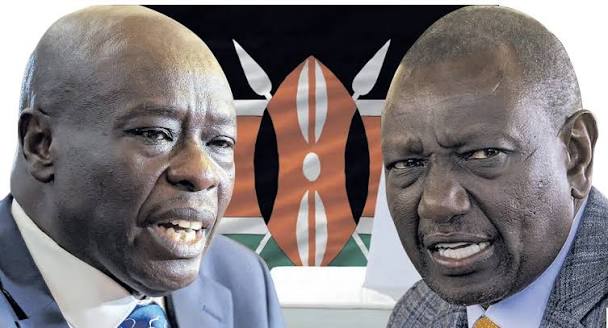
As the 2027 General Election approaches, Mt Kenya is facing a political question that goes beyond whether the region will support President William Ruto or former Deputy President Rigathi Gachagua.
The bigger challenge is whether its political leaders can agree on a common direction despite having competing ambitions, party loyalties and different calculations about their political futures.
For years, Mt Kenya’s political influence has been associated with its ability to mobilise voters behind a common presidential candidate. The 2022 election demonstrated the importance of that coordination when the region became a significant part of the coalition that propelled Ruto to power.
But the political fallout between Ruto and Gachagua has changed the equation.
The region is now dealing with competing political centres, emerging parties and leaders who want to shape the next political arrangement.
The result is a contest that could either produce a new regional consensus or expose deeper divisions.
The end of automatic political consensus
Mt Kenya’s political history has often been shaped by influential leaders who could mobilise support across several counties.
However, the emergence of competing political camps suggests that the region may no longer respond to a single political voice.
Gachagua has positioned himself as a leading critic of Ruto’s administration and is using his Democracy for the Citizens Party (DCP) to build an alternative political platform.
At the same time, Ruto continues to rely on Deputy President Kithure Kindiki and other regional leaders to maintain the government’s political presence.
The emergence of Ndindi Nyoro’s People’s Party of Kenya adds another centre of political organisation.
These developments demonstrate that Mt Kenya’s political leadership is increasingly contested.
The region may still share common economic and political interests, but its leaders do not necessarily agree on how those interests should be pursued.
Gachagua wants unity, but under whose leadership?
Gachagua’s political message has consistently emphasised the need for Mt Kenya to speak with one voice.
His argument is that a divided region risks losing its bargaining power in national politics.
The growth of DCP and the arrival of politicians previously associated with other parties form part of this strategy.
The reception of Gatundu South MP Gabriel Kagombe, Laikipia West MP Wachira Karani and Nyeri Woman Representative Rahab Mukami at Wamunyoro on November 17 illustrated his efforts to build a broader political coalition.
However, regional unity raises a difficult question: who determines its direction?
Politicians who join DCP may support Gachagua’s leadership, but that does not mean every political figure in the region will accept his authority.
Other leaders have their own constituencies, political networks and ambitions.
Some may prefer a negotiated coalition in which several leaders share influence rather than a political arrangement centred on one personality.
This is where Gachagua’s unity message could face its biggest test.
He must convince other political players that a common platform will accommodate their interests rather than simply strengthen his personal political position.
Ruto’s allies have their own argument
On the other side, leaders supporting Ruto have reasons to resist the idea that Mt Kenya’s political future should be determined by Gachagua.
Kindiki’s position in government gives him access to national leadership structures and an opportunity to defend the administration’s record in the region.
Other UDA-aligned leaders also have political interests that may be better served by maintaining their relationship with the ruling party.
For these politicians, remaining in government is not necessarily an indication that they have abandoned regional interests.
They may argue that working with the President offers a more practical route to securing development commitments and national influence.
The disagreement is therefore about both political leadership and strategy.
Should Mt Kenya negotiate from outside government, as Gachagua’s political approach suggests, or maintain a relationship with the incumbent administration?
The answer could shape the region’s political alliances in 2027.
The danger of turning unity into a political test
One of the risks facing Mt Kenya is the tendency to judge political loyalty through party affiliation.
A politician supporting Ruto may be portrayed as having abandoned the region, while one joining DCP may be presented as having returned to its political fold.
Such labels can narrow political debate.
Regional interests are not necessarily served by every decision made by politicians claiming to represent the community.
Equally, disagreement with a particular political leader does not automatically mean that a politician has abandoned the interests of the region.
A healthy political arrangement should allow leaders to debate policy, question decisions and pursue different political strategies without being treated as enemies.
The challenge is ensuring that these differences do not prevent the region from discussing issues that affect its people.
Personal ambitions could complicate coalition building
The 2027 election will require politicians to make difficult decisions about presidential alliances, parliamentary tickets and county leadership positions.
Gachagua has his own national political ambitions.
Kindiki has a prominent position within the government.
Nyoro is building an independent political organisation, while established figures such as Martha Karua, Peter Munya and Justin Muturi have their own political histories and networks.
These leaders may agree on some regional concerns but differ over who should lead a political coalition or negotiate its terms.
The same challenge applies to governors, senators and MPs who must consider their own re-election prospects.
A politician seeking a gubernatorial ticket may not share the same political priorities as one pursuing a parliamentary seat or a national leadership position.
Consequently, calls for unity will have to confront the practical question of how competing ambitions can be accommodated.
Voters may not follow their leaders automatically
There is another factor that political leaders cannot ignore: the independence of voters.
The movement of elected leaders between political parties does not guarantee that their supporters will make similar choices.
A politician may join DCP, remain in UDA or establish a new political formation, but voters will still assess candidates based on their own interests and expectations.
Issues such as the cost of living, employment, agriculture, infrastructure, taxation and access to public services are likely to influence electoral decisions.
This means regional unity cannot be built entirely through political meetings and party recruitment.
Leaders must demonstrate that their political arrangements can address issues affecting ordinary households.
The 2027 election will provide a test of whether the political messages being advanced by competing leaders reflect the priorities of voters.
A united region does not necessarily need one party
The debate about Mt Kenya’s unity should not be reduced to whether every politician must belong to the same political party.
A region can have different political formations while maintaining common positions on important national issues.
What matters is whether its leaders can agree on clear priorities and negotiate them effectively.
These could include the region’s economic interests, agricultural policy, representation in national institutions, devolution and opportunities for young people.
Such an approach would allow political competition without making every disagreement a regional crisis.
However, it requires leaders to distinguish between personal political survival and broader public interests.
It also requires a willingness to negotiate rather than demand unquestioning loyalty.
The 2027 test
Mt Kenya’s political realignment is still developing.
DCP is expanding its network, UDA is defending its influence and other political formations are seeking a place in the emerging contest.
No single leader or party can yet claim an uncontested mandate to determine how the entire region will vote in 2027.
The real challenge is whether the region’s political figures can move beyond competing claims to leadership and establish a common understanding of what they want from the next government.
Gachagua may believe that unity under his political leadership offers the strongest route to regional influence.
Ruto’s allies may argue that maintaining a relationship with the government is more beneficial.
Other leaders may prefer a broader coalition that does not place the region’s political future in the hands of one individual.
All these positions are part of a legitimate political debate.
But the region must eventually confront a bigger question: will its leaders negotiate around the interests of voters, or will voters be expected to organise themselves around the ambitions of political leaders?
That distinction could define Mt Kenya’s politics long after the 2027 election.

More Stories
Waithira beats aviation industry leaders to clinch SkyTeam golf title
Mars Wrigley backs forest restoration with 1,000 trees
Daystar University, Matatu Workers Union Partner to Train Public Transport Crews