

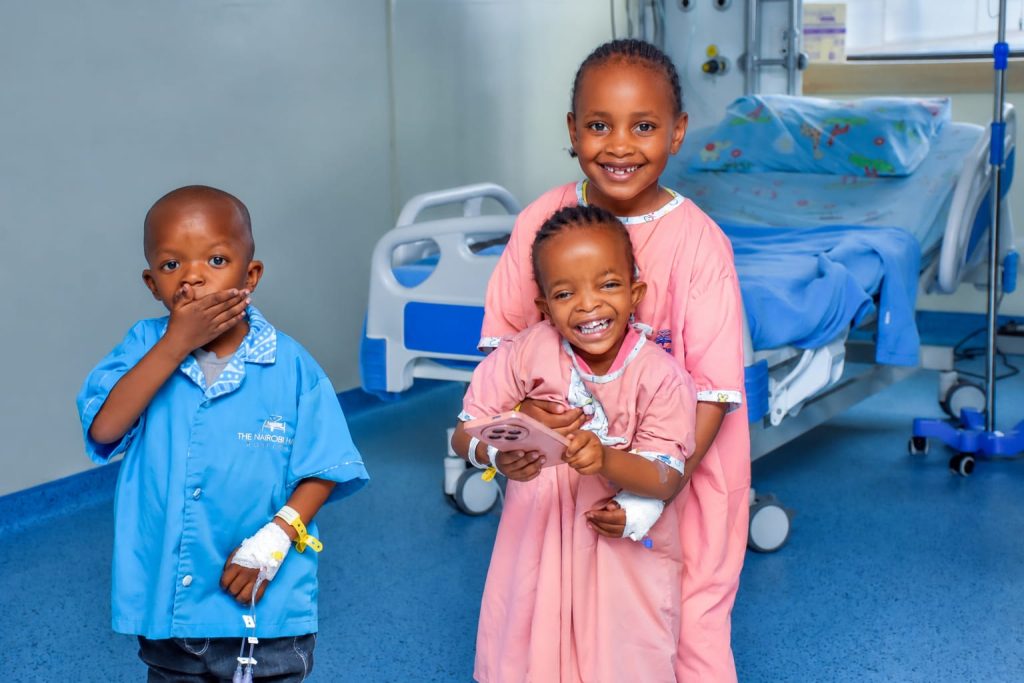
- Supported by the NGO Care for Heart and The Nairobi West Hospital management.
The Nairobi West Hospital has completed the first phase of a paediatric cardiac camp, performing six minimally invasive, catheter-based procedures on children. All six procedures were provided free of charge to the patients, with support from the NGO Care for Heart.
The procedures were performed by Dr Vijaysinh Patil, Director of the Cath Lab and Senior Interventional Cardiologist at The Nairobi West Hospital. They comprised five atrial septal defect (ASD) closures and one patent ductus arteriosus (PDA) closure.
The initiative brought together specialist hospital care and NGO support to help children access treatment for congenital heart defects.
Both conditions involve abnormal openings or connections affecting blood flow through the heart. If left untreated, significant defects can lead to complications, including pulmonary hypertension, heart failure and reduced exercise tolerance.
The procedures use specialised devices delivered through a catheter inserted into a blood vessel, usually in the groin, to close the defect. Unlike conventional open-heart surgery, catheter-based closure does not require opening the chest and may allow eligible patients to recover more quickly.
However, not every congenital heart defect is suitable for device closure. The decision depends on the type, size and location of the defect, as well as the child’s overall health.
Congenital heart disease remains a global concern
Congenital heart disease is among the most common birth defects worldwide, affecting the structure of the heart or major blood vessels.
According to the World Heart Federation’s World Heart Report 2026, an estimated 16 million people were living with congenital heart disease globally in 2023, while approximately 2.3 million children were born with the condition that year. The report highlights the significant global burden of congenital heart disease and the challenges of accessing timely diagnosis and specialised treatment, particularly in low- and middle-income countries.
In Kenya, the exact national prevalence remains difficult to establish due to limited population-based data. However, congenital heart defects are regularly identified in paediatric cardiac clinics and referral hospitals, where children may present with symptoms ranging from poor weight gain and recurrent respiratory infections to breathing difficulties and delayed development.
Some children have no obvious symptoms during infancy, making screening and timely medical assessment important.
Understanding the two conditions
An atrial septal defect is an opening in the wall separating the heart’s two upper chambers. Depending on its size, it can cause excessive blood flow to the lungs and place additional strain on the right side of the heart.
A patent ductus arteriosus occurs when a blood vessel connecting the aorta and pulmonary artery during foetal development remains open after birth. This can cause abnormal blood circulation and, in significant cases, strain the heart and lungs.
Both conditions can be managed through different approaches, including monitoring, medication where appropriate, catheter-based intervention or surgery, depending on clinical assessment.
The completion of the six procedures marks the end of the camp’s first phase, providing treatment to children whose conditions were assessed as suitable for device closure.
The initiative highlights the importance of collaboration between healthcare providers and organisations supporting access to specialised medical care. Early diagnosis and timely intervention can help prevent complications and improve long-term outcomes for children born with heart defects.



More Stories
How China Is Shaping a Mexican Architect’s Vision for Future Cities
Trust Summit 2026 Adopts 29-Point Nairobi Call to Action
Safaricom Introduces Biometric Verification in Franchise Shops to Improve Customer Service