

By Isabella Maua
Backward culture and traditionally designated gender roles have been proven to be the main cause for over 60% of cases of gender-based violence in Bungoma County.
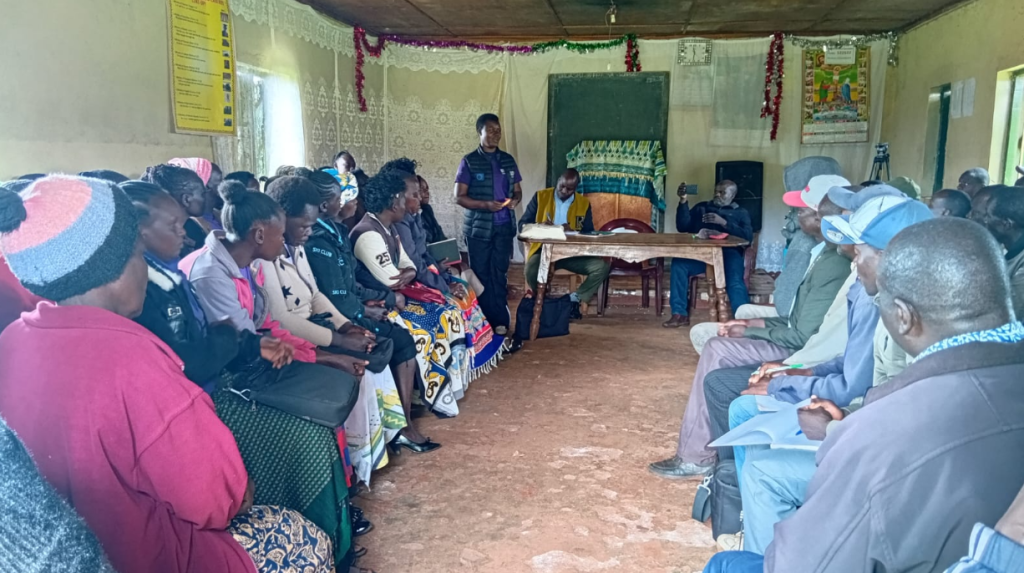
Speaking during a two-day Community Dialogue at Kopsiro Subcounty, Caroline Cheuno, a member of Bungoma Women Caucas and a counselling psychologist, observed that many youths nowadays have shunned marriage for fear of GBV.
“When we live in an oppressive society, we don’t expect our children to expect different lives in the same environment; many of our children fear suffering the same fate their parents have suffered since time immemorial,” she said.
According to the opinion leaders of the Sabaot community present from across Kopsiro, representing Kaboriot, Emia, and Korng’otuny locations, the strong Sabaot traditions have negatively affected both the old and the youths and have increasingly promoted GBV in the entire region.
“Since our olden days, women had to undergo female genital mutilation to be accepted in the Sabaot Community. Besides that, we have roles that were specifically meant for them. Nowadays, things have really changed, and we have no choice but to adapt for the sake of our women and girls,” reiterated Alfred Cheroben, an elder from the Emia location.
Ruth Awino, Chairperson of Women’s Caucas Bungoma County, emphasized the importance of averting backward culture and including both women and men in the fight against GBV in the Mt. Elgon region.
“From the dialogues we have been having, we have had a big challenge changing the minds of the older generations, but this time around, we want to focus more on the youths since they are the ones who need to change this narrative,” she added.
Chebet, one of the women leaders in Korng’otuny, paints a picture that represents the daily lives of women within the area.
She explains, “I wake up at 5 am while my husband is still dead asleep. I milk cows, prepare breakfast for my husband and children, and get the children ready to go to school. Then later on I look for water with the donkeys with my infant on the back; all this time my husband is resting, and after having his breakfast, he goes to play pool with his mates at the market center till late in the evening, and then he comes home demanding a decent meal and a warm welcome from me.”
Her sentiments were echoed by Edith, a whistleblower within the region who observed that despite the significant drop in gender-based violence cases in Mt. Elgon, there is still a need for more talks and intergenerational dialogue.
“Because we live in a remote forest region, many people remain uninformed. There is a need for more education and counselling, especially for men in polygamous relationships who mistreat women,” remarked Edith.
Beatrice Were, the project manager of the Ripple Effect I4RR project (Scaling Innovations 4 Reduced and Redistributed Women’s Unpaid Care Work), lauded the village elders, peace ambassadors, and “Nyumba Kumi” elders who fully participated in the dialogue.
“Unpaid care work has left women more overloaded than men due to some cultural gender norms,this dialogue has helped us unpack these barriers to create gender work balance,” Were acknowledged.
She cited that they are targeting 70% of women and 30% of men and youths to benefit from the I4RR project so as to achieve gender and social inclusion in the society.
Kibet, one of the men representing the Korng’otuny location, noted that despite the fact that most of them have learned about gender roles through Ripple Effect, our strong cultural beliefs still affect our marriages.
“Sometimes I want to help my wife, who has done a lot of house chores, gone to look for water for a long distance, and taken care of the children; however, whenever I try washing utensils or milk the cows, she condemns me in the strongest terms possible, citing that it is an abomination,” Kibet divulges.
Ndiema, an elderly man, upheld that Sabaot women have strongly held onto their cultural beliefs, which have brought more harm than good and have even hindered successful fights against GBV among the community members.
Following the discussion, Alex Satia, a representative of the State Department for Gender and Affirmative Action, announced the recent launch of the Kopsiro Gender Technical Working Group, which the Deputy County Commissioner chairs.
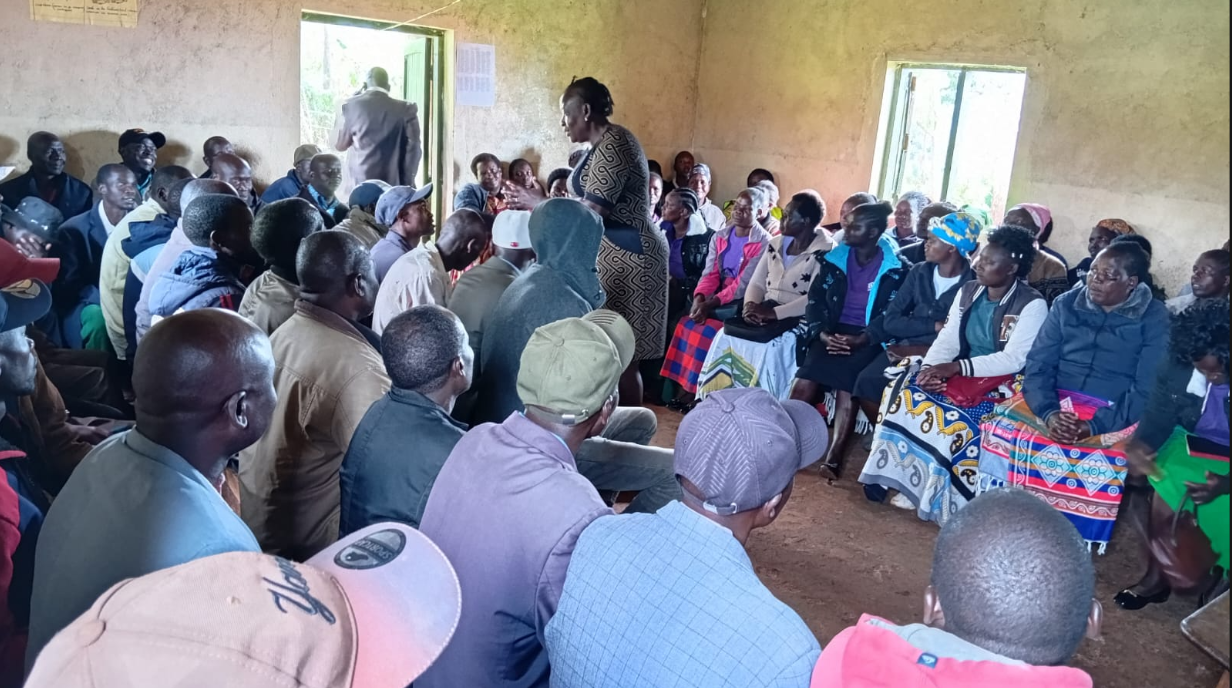
“We’ve had fruitful sessions this far, and we hope that the working group will assist us in eradicating GBV in this region,” he said.
Jackline Chebet, chairlady of the Mulembe Women Group, reported that since they joined Ripple Effect, GBV cases in Chepyuk ward have reduced significantly.
“Before Ripple Effect came to Mt. Elgon, we did not have women’s or youth groups, and around 20 cases of GBV were reported each month. Since Ripple Effect began working in the area, we have gone for months without any reported cases of GBV, and we are very grateful,” she said joyfully.
Johnson Takur, an elder from the Ogiek community, acknowledged that deeply rooted traditional beliefs have long harmed the community. However, he said Ripple Effect has brought renewed hope and urged parents to lead by example so their children can follow their example.
As the community dialogue sessions concluded, the community elders unanimously agreed that to save the upcoming generation, men’s inclusivity would be a key factor.
Among other lasting solutions were husbands physically showing love and affection to their wives, both men and women being adequately prepared mentally and psychologically before marriage, community members stopping incitement against united families and community members, and especially youths keeping off drugs and substance abuse.
Conclusively, education is the only door to eradicating backwardness, and taking children to school could in a great way fight illiteracy and poverty, which are main factors promoting gender-based violence.
According to Kenya Demographic and Health Survey data 2022,62% of women in Bungoma aged 15 to 19 have experienced physical violence with 30%having faced sexual violence.
Hospots include: Mt.Elgon, Kimilili, Bumula, Tongaren and Sirisia constituencies.




More Stories
Safaricom Celebrates Kenya’s Top Photographers and Videographers
Merck Foundation Marks World Heart Day 2026 with First Ladies
From Access to Participation: Safaricom Deepens Focus on Disability Inclusion