

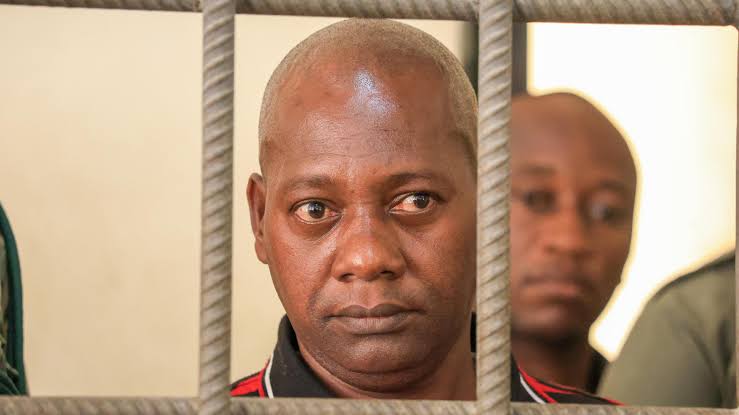
Controversial preacher Paul Nthenge Mackenzie and 28 co-accused have returned to the Mombasa High Court for sentencing following their conviction over the deaths of 190 children and one adult in the Shakahola Forest tragedy.
The sentencing, scheduled for Friday, November 6, 2026, follows a judgment delivered on October 19 in which Justice Diana Kavedza found all 29 accused guilty of 191 counts of murder.
The case arose from the deaths of followers of Mackenzie’s Good News International Church, who were subjected to an organised system of extreme fasting in the belief that they would meet Jesus.
The prosecution has urged the court to impose the death penalty on Mackenzie, arguing that his role in the killings and the number of victims warrant the maximum punishment provided under Kenyan law.
DPP Seeks Death Penalty for Mackenzie
During sentencing submissions, Deputy Director of Public Prosecutions Jami Yamina told the court that capital punishment was appropriate given the scale of the deaths and the circumstances surrounding the offences.
“The prosecution supports the imposition of capital punishment for Mackenzie, subject to consideration of his mitigation, remorse, regret and prospects of rehabilitation,” Yamina submitted.
The prosecution relied on Section 204 of the Penal Code and the Supreme Court’s decision in the Muruatetu case, which addressed the mandatory nature of the death penalty for murder.
For the other 27 accused persons, the State sought life imprisonment, arguing that their individual roles in the killings and the risk of reoffending should guide the court’s decision.
The prosecution also proposed consecutive sentences if the court declined to impose life imprisonment, arguing that each of the 191 deaths represented a separate murder offence.
Mackenzie and Co-Accused Convicted Over 191 Deaths
The sentencing follows the October 19 judgment in which Justice Diana Kavedza found Mackenzie and 28 co-accused guilty of murdering 190 children and one adult at Shakahola Forest in Kilifi County.
The court established that the deaths resulted from an organised system of religious teachings and enforced fasting, which began with children before extending to young people, women and men.
Mackenzie, who led Good News International Church, was found to have directed followers to fast to death in the belief that they would meet Jesus.
The prosecution presented evidence from witnesses, alongside forensic investigations, medical reports, DNA analysis and digital recordings, to establish the circumstances surrounding the deaths.
According to the Directorate of Criminal Investigations, investigators recovered evidence from mass graves and homesteads that helped establish the organised nature of the fasting system.
The trial involved 123 prosecution witnesses and nine defence witnesses, with the court finding that the prosecution had proved the murder charges beyond reasonable doubt.
Shakahola Victims and the Discovery of Mass Graves
The Shakahola tragedy came to national attention in April 2023 after police began investigating reports of missing people and discovered shallow graves in the forest.
Investigators subsequently recovered 429 bodies from the wider Shakahola area, although the murder case before the court concerned 191 deaths.
Medical examinations established that starvation was a major cause of death, while other victims had died through different forms of violence, including suffocation, strangulation and traumatic injuries.
The court heard that children were among the first victims subjected to the fasting regime, with some reportedly denied food and water while those who attempted to resist faced punishment.
The wider tragedy prompted national debate about religious extremism, child protection and the regulation of religious organisations in Kenya.
Defence Appeals for Leniency
During mitigation, Mackenzie and his co-accused asked the court to consider their personal circumstances, conduct while in custody and participation in rehabilitation programmes.
Their lawyers urged the court to consider the possibility of reform and rehabilitation when determining the appropriate punishment.
Mackenzie also pleaded for mercy, while acknowledging the loss of lives and property associated with the tragedy.
However, the prosecution questioned whether the accused had sufficiently abandoned the teachings associated with the deaths and raised concerns about the possibility of reoffending.
The State argued that sentencing should take into account the seriousness of the offences, deterrence, public protection and the need to ensure accountability for the victims.
Mackenzie Faces Other Legal Proceedings
The murder convictions are part of a wider series of legal proceedings arising from the Shakahola tragedy.
Mackenzie also faces separate cases involving manslaughter, terrorism and other offences linked to deaths and alleged abuses involving followers of his religious movement.
He has denied the allegations in those separate proceedings.
The sentencing in the 191-count murder case is expected to determine the penalties facing Mackenzie and his co-accused following one of Kenya’s most closely watched criminal trials.


More Stories
Cledun Realtors Announces Black November Deals With KSh50,000 Discount on Wema Court Phase II
Kalonzo Demands Special Inquiry into Homa Bay Rally Violence, Claims 61 Killed
Safaricom Launches M-PESA Jumbe to End ‘Show Me Your Message’ Payment Checks