

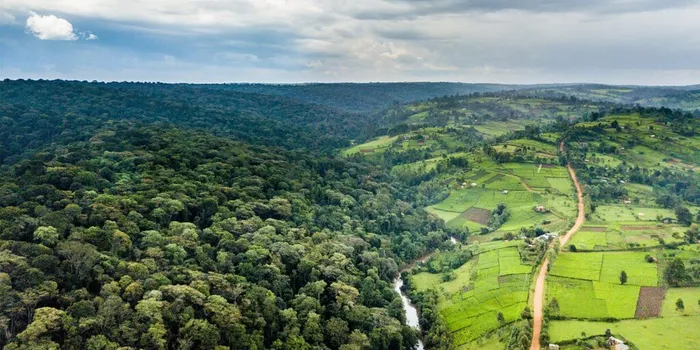
Kenya has secured at least US$229 million in new external financing for forest and landscape-based economic development as African countries step up efforts to attract investment for forest protection and restoration.
The financing makes Kenya one of the key African examples in the first Progress Report of the Forest Finance Roadmap, which was launched during the Forest & Climate Leaders’ Partnership (FCLP) Forest Finance Day at Climate Week NYC.
The report shows that Kenya’s funding includes a US$200 million World Bank operation and a US$29.2 million Green Climate Fund grant targeting the Lake Region.
Kenya has also increased its domestic spending on forestry.
The country’s forestry budget rose by about US$38.7 million in the 2025/26 financial year. The government has maintained an allocation of about US$143.8 million for 2026/27.
The increased spending comes as Kenya seeks to build a forest-based economy that generates economic value while protecting and restoring natural resources.
The report also highlights a broader pipeline of forest bioeconomy investments. Institutions involved in the sector are targeting up to US$10 billion in investment by 2030, while about 3.7 million hectares have been committed for protection and restoration.
The developments place Kenya among a growing group of African countries seeking to move forest finance beyond traditional conservation funding.
The first Progress Report of the Forest Finance Roadmap, however, warns that global funding remains far below what is required to halt and reverse forest loss by 2030.
The Roadmap estimates an annual forest finance gap of US$66.8 billion.
Forests currently receive less than one per cent of global climate finance despite providing about one fifth of the world’s cost-effective climate mitigation potential.
Emelyne Cheney, director of the FCLP Secretariat, said the report provides a clearer picture of where forest finance is flowing and where funding gaps remain.
“That clarity matters: closing the forest finance gap starts with understanding its scale and where the gaps lie,” she said.
Cheney said pressure on forests was increasing and called for sustained political attention and investment at scale.
“Forests cannot be an afterthought in the international climate agenda – they need to remain at the centre of it,” she said.
Kenya’s experience is part of a wider shift in Africa, where governments are increasingly using domestic budgets, international financing, carbon markets and results-based funding to support forest protection.
Ethiopia, for example, allocates between 0.5 and one per cent of its annual federal budget, equivalent to about US$40 million to US$80 million, to forest and landscape restoration.
Nigeria has developed a government-led framework to align development partners, financial institutions, philanthropy and private investors behind its forest, climate and biodiversity priorities.
In the Congo Basin, the Central African Forest Initiative (CAFI) is developing a US$290 million Payments for Ecosystem Services pipeline, with an ambition to mobilise up to US$2 billion by 2035.
Africa has about 663 million hectares of forest, representing 16 per cent of the world’s forest area.
The report says how the continent manages these forests will be critical to the global target of halting and reversing forest loss by 2030.
For Kenya, the combination of international financing and increased domestic budget allocations points to a broader effort to make forests part of economic and investment planning.
The challenge now is whether the funding can be deployed quickly enough and at sufficient scale to deliver measurable gains for forests, communities and the wider economy by 2030.


More Stories
Kenya calls for stronger after-sales support as WHX Nairobi attracts 250 healthcare firms
Ex-MP Ngunjiri Wambugu Challenges Matiang’i to Resolve Jubilee Leadership Dispute
We are fully implementing Kenya Kwanza development manifesto; every part of Kenya benefitting- DP Kindiki assures