

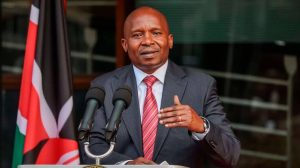
Deputy President Kithure Kindiki has urged voters in the Mt Kenya region to elect leaders based on their development record rather than political rhetoric, challenging politicians to demonstrate what they have delivered for citizens ahead of the 2027 General Election.
Speaking during public engagements in Ndia and Gichugu constituencies in Kirinyaga County on Friday, October 16, 2026, Kindiki framed the upcoming election as a contest between development and political rhetoric, arguing that voters should assess leaders by their policies, projects and commitment to public service.
“Next year’s contest will be a contest between ideas and rhetoric. It will be a contest between Kenya’s future and its past, between work and insults, between inclusion and exclusion, and between policies and noise,” he said.
The Deputy President urged residents to look beyond political slogans and evaluate leaders based on their contributions to infrastructure, agriculture, electricity connectivity and other services that directly affect households.

His remarks come as political competition intensifies in Mt Kenya ahead of the 2027 elections, with leaders seeking to influence voters through competing arguments about the government’s performance and the region’s political direction.
Kindiki Challenges Opposition on Development Record
Kindiki challenged opposition leaders to explain what they had delivered for residents while holding public office, citing roads, water projects and electricity connections as areas voters should consider when assessing political leadership.
He defended the Kenya Kwanza administration’s development agenda, pointing to ongoing infrastructure projects and other investments in Kirinyaga as evidence of the government’s efforts to address longstanding challenges facing local communities.
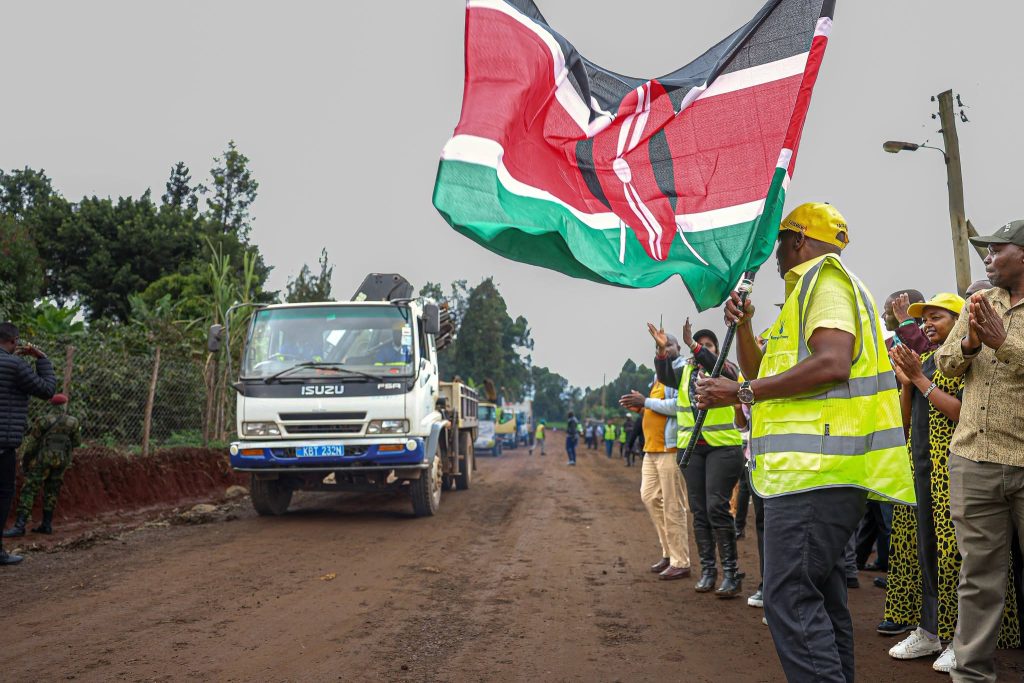
In Gichugu, the Deputy President said approximately 100 kilometres of roads were undergoing construction, including 53 kilometres in the eastern part of the constituency and 42 kilometres in the west.
“The people of Gichugu know that, for a long time, this area did not receive enough tarmac roads. The roads were being constructed in other areas, but when it came to Gichugu, the programme seemed to stop,” he said, crediting President William Ruto’s administration with addressing the situation.
Across Kirinyaga County, the government has prioritised 571 kilometres of roads for tarmacking at an estimated cost of Sh42 billion. According to figures provided during the tour, construction is ongoing on 472 kilometres at a cost of Sh37 billion.
The projects are expected to improve transport links for farmers moving tea, coffee and milk to markets, while easing access to schools, health facilities and commercial centres.
Electricity and Coffee Prices Feature in Kindiki’s Defence
The Deputy President also cited rural electrification and agricultural reforms as areas where the government was seeking to demonstrate progress.
He said 32,000 households in Kirinyaga had been connected to electricity since September 2022, with another Sh845 million allocated to connect 10,800 households. In Gichugu, he said Sh75 million had been set aside for additional electricity connections.
On coffee farming, Kindiki said some factories were paying farmers Sh150 per kilogramme, compared with between Sh50 and Sh60 in 2022. He acknowledged that tea farmers continued to face challenges and said measures were needed to improve their earnings.
Kirinyaga’s agricultural economy depends heavily on cash crops, making farm-gate prices, production costs and access to markets significant concerns for households. The effect of government policies on farmers’ incomes is therefore likely to remain part of the debate as voters assess the administration’s record.
Kindiki further highlighted 110 affordable housing units in Kianyaga, student accommodation at Gichugu Technical and Vocational Education and Training institution, and modern markets among the projects being pursued in the region.
He also said the Sh500 million County Aggregation and Industrial Park at Sagana had been completed, presenting the facility as part of efforts to support agricultural value addition and commercial activity.
Kindiki Calls for Peaceful Political Competition
Beyond development, Kindiki warned political leaders against incitement and violence as the country approaches the next general election.
He urged politicians to discourage attacks on opponents, road blockades and looting, warning that such actions undermine peace and disrupt economic activities.
“No country can be built through violence,” he said.
The Deputy President’s remarks placed political tolerance alongside development as a central theme of his engagements in Kirinyaga, calling on leaders to respect one another despite their competing political positions.
His appeal comes amid growing political mobilisation in Mt Kenya, where the debate over government performance, regional representation and leadership choices is expected to feature prominently ahead of 2027.

Kindiki maintained that public investment should benefit citizens regardless of their political affiliation, arguing that development should not be determined by whether residents support the government or the opposition.
Government Admits More Work Remains
While defending the administration’s development record, Kindiki acknowledged that more work remained in agriculture, infrastructure, healthcare and education.
He urged voters to examine the performance of leaders across these sectors when making their choices in 2027, reinforcing his argument that electoral decisions should be informed by delivery rather than rhetoric.
The Deputy President’s message seeks to make development performance a central measure of political accountability, challenging both government and opposition leaders to demonstrate how their policies and decisions have affected citizens.
More Stories
Ruto Signs VAT Amendment Law Extending 8% Fuel Tax Rate for 90 Days
Koimburi Accuses Gachagua of Radicalizing Mt Kenya with ‘One Term’ Campaign
Is ‘Kumi ya Ruto, Kumi ya Kindiki’ an Early Succession Campaign for 2032?