

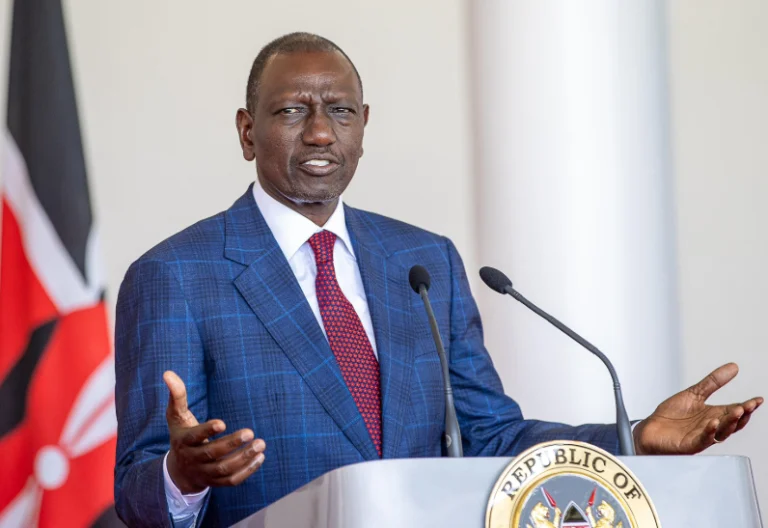
President William Ruto has assented to the Value Added Tax (Amendment) law, extending the 8 per cent VAT rate on petroleum products for a further 90 days amid continued uncertainty arising from the conflict in the Middle East.
Molo Member of Parliament Kuria Kimani said the President signed the law at Eldoret State Lounge, adding that the extension was intended to respond to ongoing international developments affecting the petroleum sector.
The extension maintains the reduced VAT rate on petroleum products for another three months as the government responds to uncertainties in the global energy market.
The Middle East conflict has raised concerns about international energy supply chains and price fluctuations, with developments in the region having potential implications for fuel-importing economies such as Kenya.
The extension is expected to maintain the existing tax treatment on petroleum products during the additional 90-day period, although the final retail price of fuel will continue to depend on other factors, including international oil prices, exchange rates and applicable levies.
New Tax Measures Target Tiles and Ceramics
The Value Added Tax (Amendment) law also introduces changes to the taxation of tiles and ceramic products used in the construction sector.
According to Kimani, the tax measurement for tiles has shifted from kilograms to square metres, with a rate of Sh400 applicable under the new arrangement.
The amendment also reduces the applicable rate for ceramics from Sh50 to Sh30, a change intended to ease the cost of construction materials.
The measures could affect suppliers, contractors, developers and households purchasing finishing materials for residential and commercial buildings. The actual impact on retail prices will depend on how businesses apply the revised tax treatment and other costs along the supply chain.
Construction costs have remained a concern for property developers and prospective homeowners, making taxation of building materials an important consideration for the sector.
The changes to tiles and ceramics are aimed at adjusting how the products are taxed, with the government expected to implement the new provisions in accordance with the amended law.
President Also Signs KRA Amendment Bill
Kimani further announced that Ruto had assented to the Kenya Revenue Authority (Amendment) Bill, although he did not provide further details on the specific provisions introduced by the legislation.
The Kenya Revenue Authority is responsible for assessing, collecting and accounting for revenue due to the government. Amendments to its governing legal framework can affect aspects of its operations, depending on the provisions approved by Parliament and signed into law.
The signing of the two pieces of legislation comes as the government continues to adjust tax measures affecting consumers, businesses and key sectors of the economy.
Further details on the implementation of the KRA amendments and the commencement of the new tax provisions will be important in determining their practical implications for taxpayers and businesses.


More Stories
Kindiki Urges Mt Kenya Voters to Elect Leaders Based on Track Record, Not Political Noise
Koimburi Accuses Gachagua of Radicalizing Mt Kenya with ‘One Term’ Campaign
Is ‘Kumi ya Ruto, Kumi ya Kindiki’ an Early Succession Campaign for 2032?