

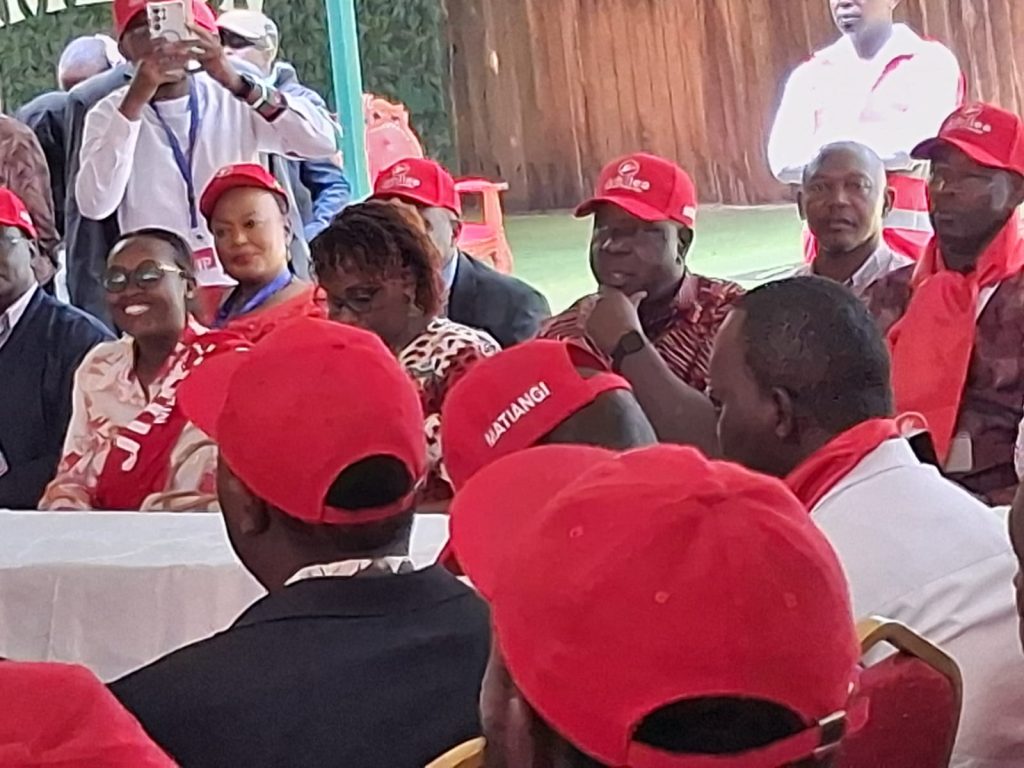
Jubilee Deputy Party Leader Fred Matiang’i has claimed that former President Uhuru Kenyatta was betrayed by some of the leaders he trusted and appointed to senior positions in government.
Speaking during a delegates’ meeting in Kiambu, Matiang’i alleged that several individuals nominated by Uhuru to the East African Legislative Assembly and the National Assembly had since turned against the Jubilee Party and its leadership.
“We know the people who betrayed Uhuru and we will continue calling them out,” Matiang’i said.
He revealed that Uhuru once cancelled an international engagement to attend the burial ceremony of the mother of one of the leaders he had appointed, describing the former president as a loyal ally who stood firmly with those around him.
Despite the fallout, Matiang’i said the Jubilee Party would continue engaging former members and leaders in an effort to strengthen and reunite the party.
The former Interior Cabinet Secretary also defended Uhuru’s continued participation in national politics, arguing that retired presidents have a democratic right to remain active in political affairs.
Matiang’i cited former U.S. President Barack Obama as an example of a retired leader who continued supporting his political party after leaving office.
He further urged Jubilee members to respect leaders within the opposition coalition and avoid attacking coalition partners on social media.
“There are proper mechanisms for resolving issues instead of shouting on social media,” he said.
Matiang’i maintained that the opposition alliance would remain united, adding that their main political rivals were the United Democratic Alliance and President William Ruto.
“Hatutaki ushenzi, we must respect our coalition partners,” he said.
He added that the Jubilee Party was making progress through grassroots meetings aimed at reconnecting with members across different regions of the country.


More Stories
Kenya Extends Regularization Window for Burundian Nationals
Coast Leaders call for a united front and greater political representation
Why You Must Request for a Site Visit Before Buying Land – Optiven CEO George Wachiuri