

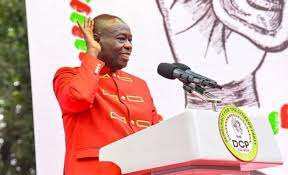
As political realignments ahead of 2027 continue to take shape, Ol Kalou in Nyandarua County is emerging as one of the key battlegrounds in Central Kenya. While former Deputy President Rigathi Gachagua and his Democratic Citizens Party (DCP) are attempting to consolidate influence in the region, early indicators suggest that the ground may be less receptive than expected—especially as the government intensifies grassroots mobilisation through state-linked and allied networks.
1. State-backed grassroots machinery remains dominant
In many parts of Central Kenya, political loyalty is still heavily influenced by local development structures, cooperative societies, and ward-level mobilisation systems that are closely aligned to the sitting administration. The government’s renewed push into rural development messaging, service delivery visibility, and local empowerment programs has strengthened its presence at the village level.
In Ol Kalou, this means DCP faces a deeply entrenched system where access to resources and development narratives still shapes voter perception more strongly than opposition messaging.
2. Incumbency advantage and resource visibility
The government retains a structural advantage: visibility. Ongoing infrastructure projects, agricultural support initiatives, and county-national government collaborations continue to reinforce the idea of continuity and stability.
Opposition-aligned parties like DCP are often forced into a reactive posture—criticising policy rather than matching tangible local delivery. In tightly contested regions like Ol Kalou, this dynamic can significantly weaken alternative political messaging.
3. Fragmented opposition messaging in Central Kenya
While Gachagua’s political influence remains strong in symbolic terms, the broader opposition ecosystem in Central Kenya is still fragmented. Competing local leaders, shifting alliances, and personality-driven politics have made it difficult for DCP to present a unified grassroots strategy.
Without a coordinated structure at polling-station level, enthusiasm at rallies does not always translate into voter turnout on election day.
4. The psychology of “development loyalty”
Voters in agricultural constituencies like Ol Kalou often prioritise tangible economic concerns—tea, dairy, roads, markets, and fertilizer distribution. Where the government is seen to be delivering—even incrementally—it gains a psychological advantage.
This “development loyalty” model tends to favour incumbents, especially when opposition parties are still building structures rather than delivering services.
5. Government penetration of local networks
Perhaps the most decisive factor is the deep penetration of government-aligned actors into local leadership structures. From ward administrators to cooperative society influence, grassroots mobilisation remains a powerful tool.
This makes it difficult for emerging political movements to fully disrupt established voting patterns without significant time, financing, and organisational depth.
Conclusion
While Rigathi Gachagua’s DCP remains a politically significant force in Central Kenya’s evolving landscape, Ol Kalou presents a more complex challenge than symbolic regional popularity alone can overcome. The combination of strong government grassroots machinery, development-driven voter psychology, and fragmented opposition organisation suggests that the contest will be highly competitive—but not necessarily favourable to new entrants without deep local structures.
If anything, Ol Kalou may become a test case for whether opposition-aligned movements can convert regional influence into structured electoral power—or whether state-backed grassroots mobilisation will




More Stories
Willstone Homes Boss Ejidio Kinyanjui Faces Rape Trial
Inside Kindiki’s latest move to scuffle Gachagua’s ‘Wantam’ politics in Mt Kenya
Kenya calls for stronger after-sales support as WHX Nairobi attracts 250 healthcare firms