

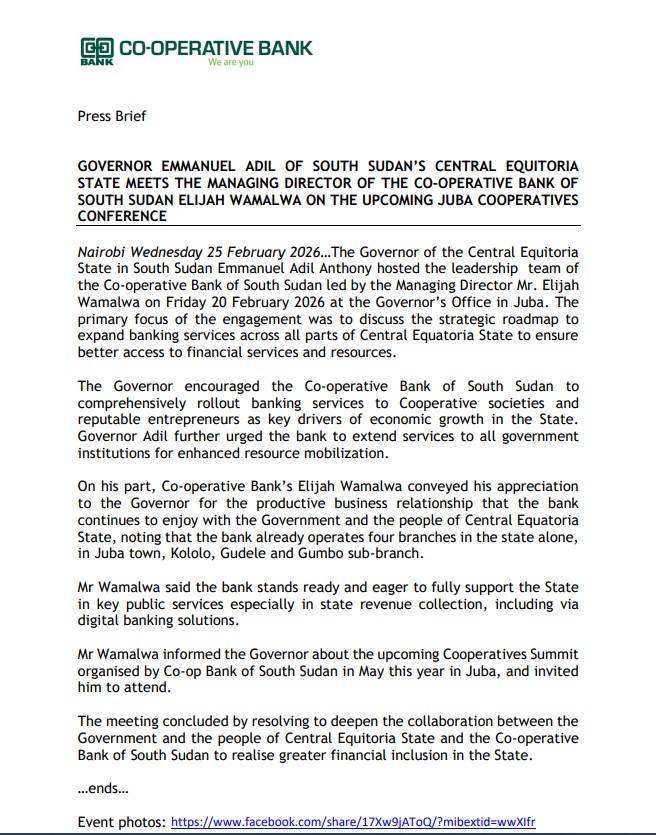
The Co-operative Bank Group is planning to widen its footprint in South Sudan, targeting cooperative societies, entrepreneurs and government institutions as part of its regional growth strategy.
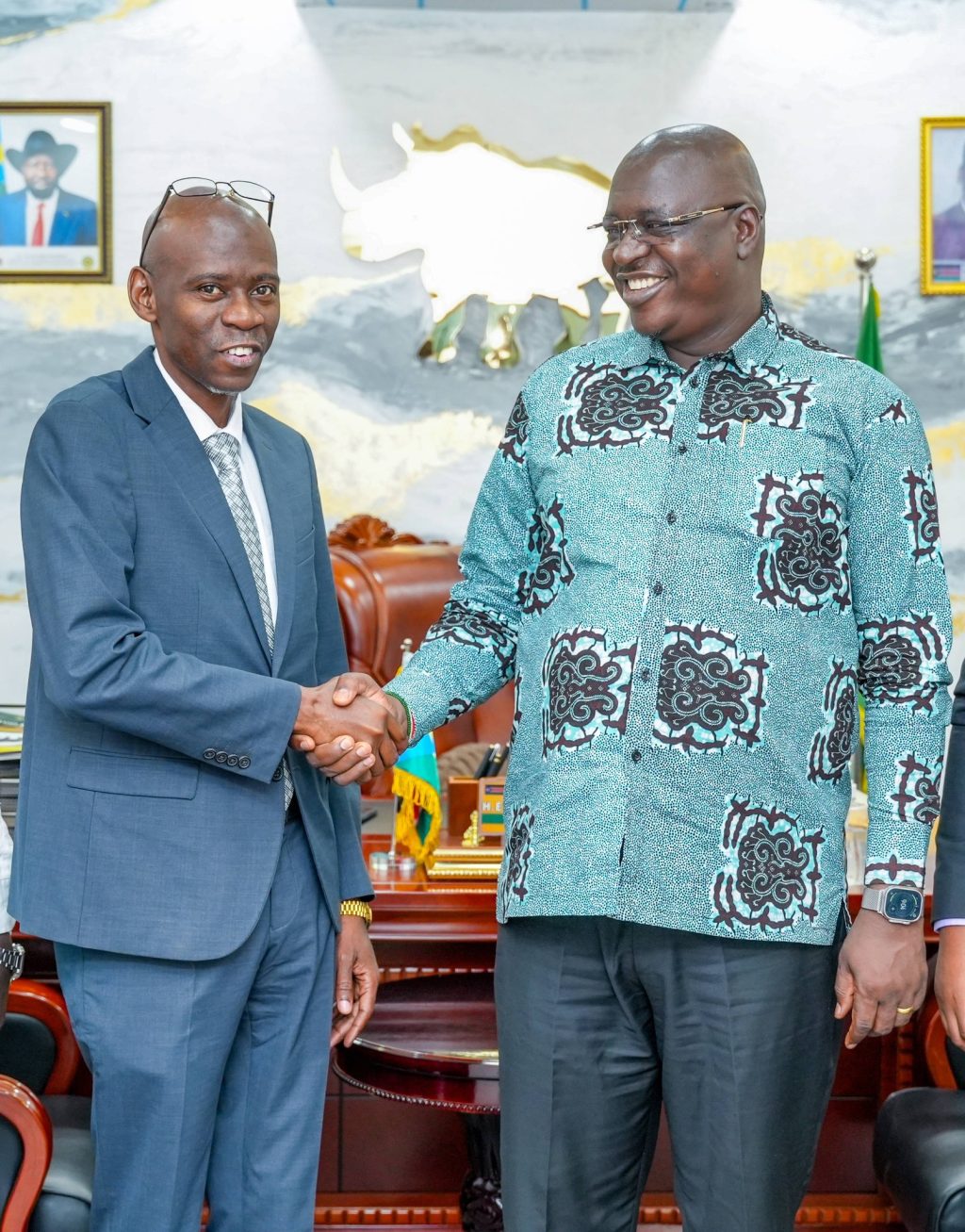
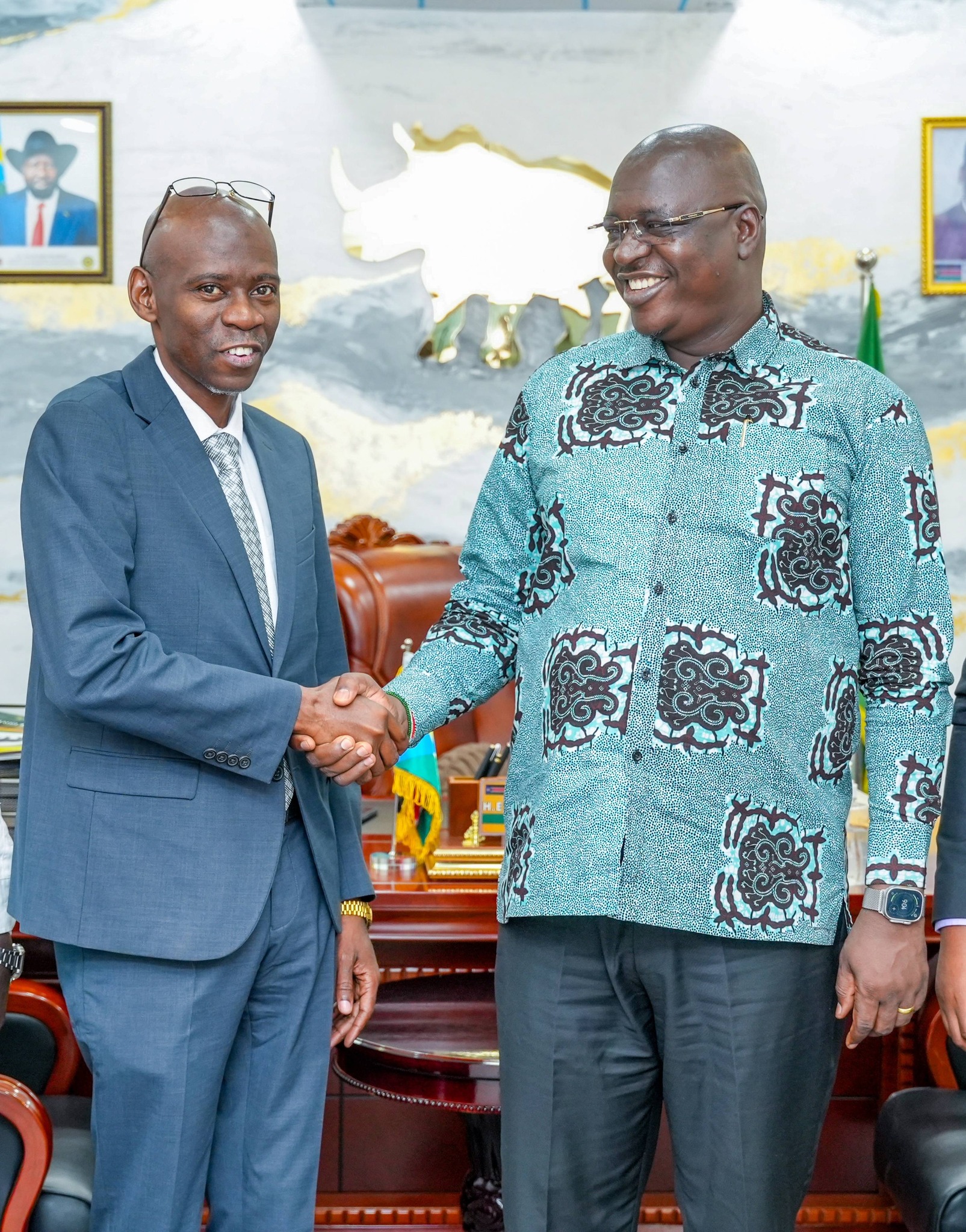
The expansion plan emerged when officials of the Co-operative Bank of South Sudan hosted Emmanuel Adil Anthony, Governor of Central Equatoria State, for discussions on strengthening banking services in the region.
In a statement, the lender said the meeting focused on a strategic roadmap to roll out banking services across all parts of Central Equatoria State to improve access to financial services and mobilise resources for development.
Governor Adil welcomed the move and encouraged the bank to scale up services to cooperative societies and credible entrepreneurs, describing them as key pillars of economic growth. He also called for deeper engagement with government institutions to enhance resource mobilisation.
Managing Director Elijah Wamalwa thanked the governor for the continued collaboration between the bank and the state government, noting that the lender already operates four branches in Juba town, Kololo, Gudele and the Gumbo sub-branch.
Wamalwa said the bank is ready to support public service delivery, particularly in revenue collection, through digital banking solutions aimed at improving efficiency and transparency.
He also briefed the governor on the upcoming Cooperatives Summit set for May in Juba, which will provide a platform to showcase innovative financial products tailored to cooperative societies.
The Kenyan-listed lender has been gradually strengthening its presence in Africa’s youngest nation as peace steadily returns and currency volatility eases.
The South Sudan subsidiary is a joint venture, with 51 per cent owned by Co-operative Bank Kenya and 49 per cent by the Government of South Sudan. Although the bank often posts operating profits, it has faced net monetary losses due to hyperinflation and depreciation of the South Sudanese Pound.
In the first nine months of 2025, the subsidiary restated a profit of Sh93.5 million after adjusting for hyperinflation.
Despite existing challenges, the bank remains optimistic about South Sudan’s economic outlook. It told investors that the country stands at a significant inflection point, supported by recovering oil flows expected to stabilise fiscal revenues, stimulate government spending and steady the exchange rate.
The lender projects inflation to ease slightly to 97.5 per cent in 2025 from 99.8 per cent in 2024. However, it cautioned that a persistent cash liquidity crisis continues to weigh on economic activity, noting that South Sudan remains largely a cash-driven economy.




More Stories
Wanyonyi Promises Better Opportunities for Bungoma Youth and Traders
Cledun Realtors Nominated for #Starbrands Awards 2026
Optiven Offers 10 Free Bags of Cement to Home Builders at Love Gardens, Kajiado