

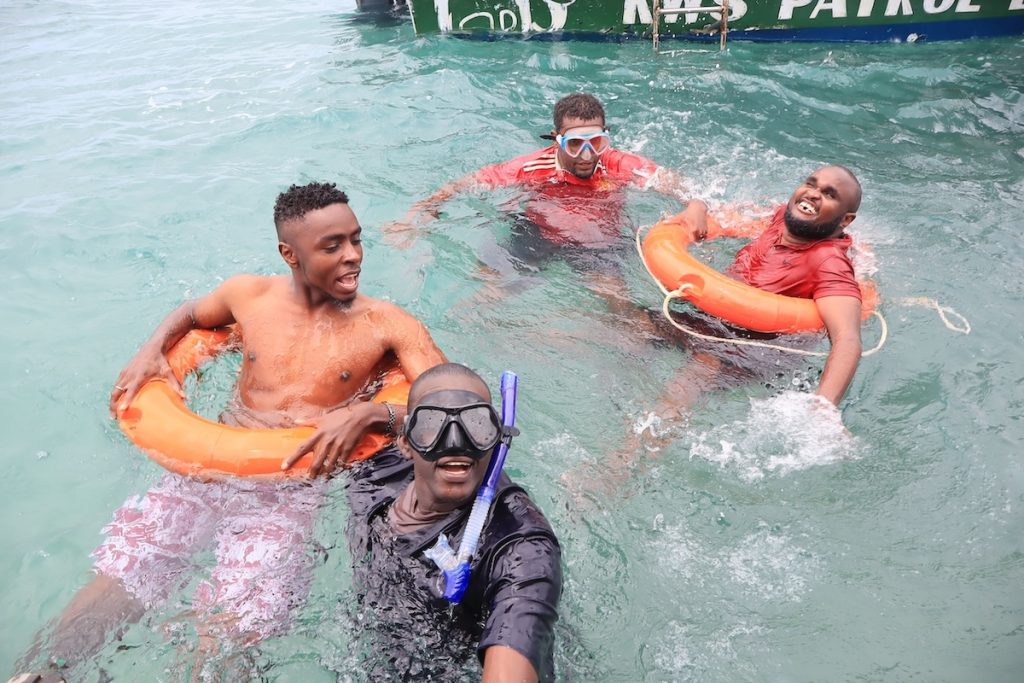
The Kenya Beyond Sight campaign has taken its message of inclusive tourism to Mombasa, giving travellers with disabilities an opportunity to experience wildlife through touch, sound and direct interaction at Haller Park.
On Day Four of the five-day campaign, six content creators moved away from conventional sightseeing as they explored the conservation area in ways designed to challenge the idea that tourism experiences must primarily depend on sight.
At Haller Park, a conservation area developed from a former limestone quarry in Bamburi, participants interacted with giant tortoises, feeling their shells and observing their movements while learning about the animals and their habitat.
The experience also included close encounters with snakes under expert guidance, allowing participants to safely interact with the reptiles while gaining a deeper understanding of their characteristics.
The content creators also had an opportunity to feed giraffes, holding out food as the animals approached and used their long tongues to collect the treats.

For participants experiencing the encounters through touch and sound, the activities offered an alternative way of connecting with wildlife and nature.
The experiences formed part of the wider Kenya Beyond Sight initiative, which seeks to demonstrate that tourism can be made more accessible by incorporating different forms of interaction beyond visual observation.
The campaign was launched by KCB in partnership with RUBiS Energy Kenya and the Kenya Tourism Board, bringing together six content creators to document a five-day journey through Eastern and Coastal Kenya.
The initiative seeks to highlight how people with different disabilities can participate in tourism while also drawing attention to accessibility gaps that continue to affect travellers.
Day Four also took the creators beyond the conservation area, with the team venturing into the streets of Mombasa after lunch.
The street experience allowed the participants to interact with residents, exchange greetings and experience the city’s everyday atmosphere.
The contrast between Haller Park’s conservation environment and Mombasa’s vibrant streets highlighted the campaign’s broader message that inclusive tourism should extend beyond tourist attractions to the wider travel experience.
Organisers have said the campaign is intended to encourage tourism stakeholders to rethink accessibility across accommodation facilities, attractions, transport services and tour operations.
The Haller Park experience also demonstrated that accessibility goes beyond ensuring that travellers can enter or move around a tourist attraction.
It involves creating meaningful opportunities for visitors to touch, listen, participate and interact directly with their surroundings.
Through social media content documenting their five-day journey, the creators are showcasing the possibilities of accessible tourism while highlighting some of the challenges that persons with disabilities continue to encounter when travelling in Kenya.
The Kenya Beyond Sight campaign is expected to conclude with further experiences along the Kenyan coast, continuing its focus on making tourism more inclusive and participatory for travellers with disabilities.

More Stories
Safaricom Sponsors Festival of Friendship With KSh1 Million
Maina Wakabura: My Political Journey Is Driven by Conviction
Ngunjiri Wambugu: I Preferred Kioni Over Matiang’i as Jubilee Party Leader