

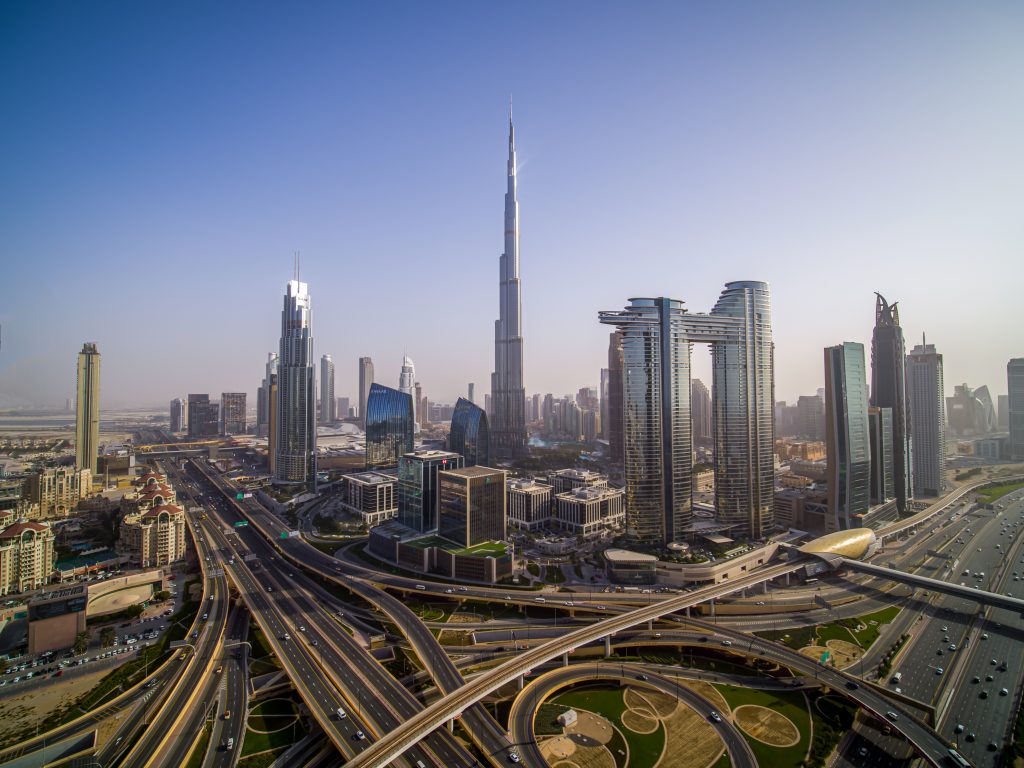
As geopolitical tensions ripple across the Middle East amid the ongoing conflict between the United States, Israel and Iran, Dubai is stepping up economic support measures and reinforcing financial stability to sustain confidence, stabilise markets, and keep business moving.
Even as the region grapples with uncertainty, the emirate is projecting a message that has defined its rise as a global hub: resilience is not reactive but engineered through policy coordination, diversified growth, and rapid institutional response.
At the centre of this response is a coordinated intervention involving government institutions, financial regulators, and the private sector. Emirates NBD, one of the region’s largest banking groups, has introduced a Business Support Package targeting small and medium-sized enterprises (SMEs), widely regarded as the backbone of Dubai’s economy.
The package, covering waived loan deferment fees, discounted trade finance costs, and reduced transaction charges, reflects effort to cushion businesses from liquidity pressures and tightening market sentiment.
The initiative aligns with wider state-led measures, including a KSh37 billion ($272 million) economic stimulus package approved by the Dubai Government and a Financial Institution Resilience Package introduced by the Central Bank of the UAE. Together, these interventions signal a coordinated policy approach aimed at maintaining financial system stability while preventing disruption to business activity.
Built for shock absorption
Dubai’s resilience in periods of regional instability is largely attributed to its long-standing strategy of economic diversification.
Unlike resource-dependent economies, the emirate has developed a multi-sector model anchored in trade, tourism, logistics, aviation, finance, and technology.
This structure has reduced exposure to single-sector shocks while strengthening cross-sector interdependence. Integrated infrastructure, spanning ports, airports, and financial systems, continues to ensure operational continuity even as geopolitical risks rise.
In the tourism sector, Dubai continues to welcome visitors and maintain normal operations across its hospitality and leisure ecosystem despite the evolving regional situation.
Issam Kazim, CEO of Dubai Corporation for Tourism and Commerce Marketing, said the city’s tourism offering remains broadly accessible, with key experiences, hotels, and attractions continuing to operate.
“Dubai continues to welcome visitors from around the world, with key experiences, hotels, and attractions operating across the city despite the evolving regional situation,” Kazim said in comments published by Khaleej Times. “Public services remain functional and much of the city’s tourism offering, including beaches, shopping destinations, and a wide range of attractions, is available to residents and international visitors, even as authorities closely monitor developments.”
This adaptability has been critical in sustaining demand and preserving investor confidence.
“The system is designed to keep moving, ensuring continuity across key sectors even during periods of uncertainty. “This allows businesses and travelers to maintain confidence in Dubai’s ability to operate seamlessly,” said Mohamed Jassim Al Rais, Honorary Chairman of the Dubai Travel and Tour Agents Business Group, in a recent publication on the Dubai Government website.
Tourism and hospitality, typically sensitive to regional shocks, have relied on flexibility in pricing, booking, and service delivery to maintain competitiveness.
Silent Backbone
Dubai’s role as a global logistics and trade hub remains a key stabilizing factor. Positioned between East and West, the emirate continues to facilitate uninterrupted movement of goods despite regional volatility, particularly in essential and perishable supply chains.
“Even during global uncertainty, Dubai continues to maintain solid growth supported by its open trade environment and modern infrastructure,” said Redha Al Mansouri, Chairman of the Fruit and Vegetable Traders Business Group, in the same recent publication. “This strength ensures the smooth movement of goods and reinforces confidence in its logistics ecosystem.”
Beyond trade, governance remains a central pillar of economic stability. Dubai’s model, defined by rapid decision-making, regulatory agility, and structured public-private engagement, has allowed policy responses to align closely with market conditions.
This framework has strengthened investor confidence by reducing uncertainty around regulation and improving responsiveness to external shocks.
Despite near-term regional pressures, Dubai continues to advance its long-term Economic Agenda D33, focused on expanding global trade links, attracting investment, and deepening economic diversification.
The strategy demonstrates a shift from reactive crisis management to forward-looking economic engineering, where resilience is built into institutional design rather than deployed as a response.
Ultimately, Dubai’s stability proposition rests on three reinforcing pillars: targeted financial intervention, diversified economic structure, and coordinated governance. Together, they continue to anchor confidence at a time when geopolitical uncertainty is testing regional economies.


More Stories
Why Russian Officials Want To Join Anticolonial Rhetoric
Trust Summit 2026 Adopts 29-Point Nairobi Call to Action
Safaricom Introduces Biometric Verification in Franchise Shops to Improve Customer Service