

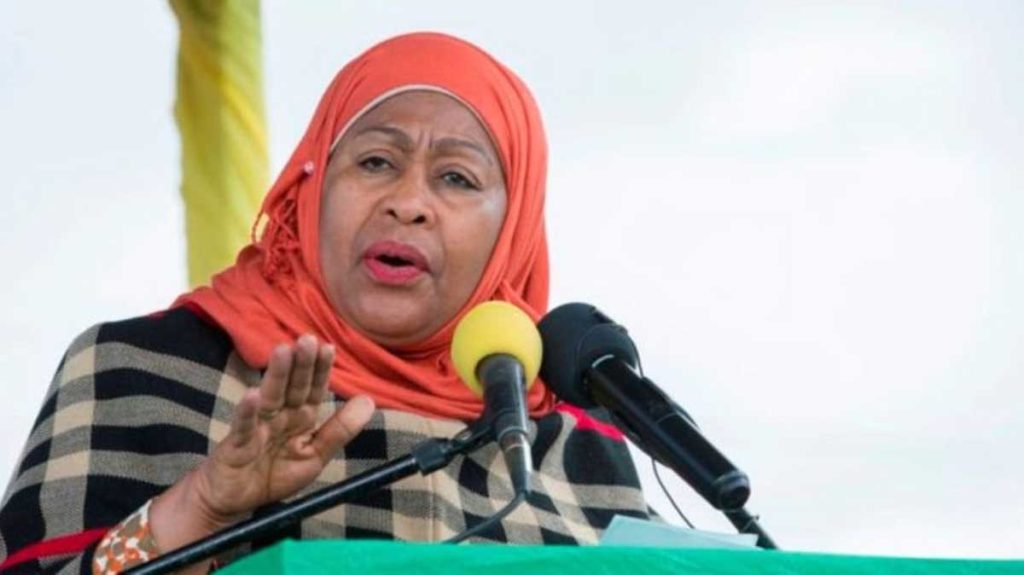
A Presidential Commission of Inquiry into Tanzania’s 2025 General Election has concluded its work with a detailed report that goes beyond documenting electoral unrest, instead situating the events within a wider East African discourse on governance risk, institutional authority, and the durability of political systems under pressure.
Presenting the findings to President Samia Suluhu Hassan in Dar es Salaam, Commission Chairperson Retired Chief Justice Mohamed Chande Othman detailed both the human cost and the economic disruptions associated with the election period, while emphasizing the necessity of sustained reforms to reinforce democratic processes, strengthen institutional credibility, and preserve national cohesion.
Beyond the immediate electoral events, the report shifts analytical attention toward deeper systemic questions that are increasingly relevant across East Africa, particularly the capacity of state institutions to manage political transitions, absorb shocks, and maintain legitimacy in periods of heightened electoral competition.
A central thread in the report is Tanzania’s continued reliance on internally driven governance responses, particularly in addressing electoral management, political disputes, and post-crisis stabilization.
This reflects a broader regional governance pattern in which East African states are increasingly prioritising domestic institutional frameworks, constitutional mechanisms, and locally grounded dialogue processes as the primary instruments for managing political tension and reform demands.
Rather than being treated as a standalone national approach, this development reflects an evolving regional governance landscape where states have, over time, balanced internal arbitration systems with varying degrees of external advisory input and regional diplomatic engagement in electoral and constitutional processes.
Increasingly, this is being interpreted as part of a wider maturing governance environment in which countries are actively refining institutional identities shaped by historical experience, political realities, and shifting expectations around democratic legitimacy.
At the core of the Commission’s recommendations is a call for a structured constitutional reform process, framed not as a reaction to electoral unrest but as a long-term governance strategy aimed at strengthening institutional resilience and improving predictability in political systems.
The report underscores that constitutional and electoral frameworks remain foundational to managing political competition across East Africa, particularly in contexts defined by rapid demographic expansion, growing youth participation in politics, and the increasing influence of digital mobilisation.
Within this context, reform is increasingly being positioned as part of a broader institutional consolidation agenda focused on deepening trust in state systems, improving inclusivity, and reinforcing the legitimacy of governance outcomes over time.
The findings also emphasize institutional preparedness during politically sensitive periods, highlighting the importance of early warning systems, inter-agency coordination, and rapid response mechanisms designed to manage fast-evolving political situations.
Across East Africa, electoral cycles continue to function as critical stress tests for governance institutions, particularly in balancing public order, constitutional rights, and large-scale political mobilisation.
The Tanzanian report therefore contributes to a growing regional focus on institutional strengthening as a core safeguard against political escalation — ensuring that governance systems are not only equipped to manage elections, but also to maintain public confidence throughout the entire electoral cycle.
Beyond governance and institutional considerations, the report reinforces an increasingly important economic dimension in East African policy thinking: the direct relationship between political stability and economic performance.
Election-related disruptions often result in measurable losses for businesses, financial institutions, and informal enterprises, while also affecting investor sentiment, trade continuity, and infrastructure development agendas.
For emerging economies in the region, this has elevated institutional credibility and political predictability into central determinants of economic resilience and long-term growth planning.
A key dimension of the report is its focus on the expanding role of digital platforms in shaping political engagement and public discourse across East Africa.
Social media has become a central arena for civic participation, political communication, and mobilisation.
However, it has also introduced new governance challenges, particularly around misinformation, rapid narrative amplification, and the speed at which political tensions can escalate in digitally connected societies.
This evolving digital environment is prompting governments and institutions across the region to reassess regulatory approaches, strengthen media literacy, and develop governance frameworks that balance freedom of expression with the protection of information integrity during politically sensitive periods.
Taken together, the Commission’s findings are increasingly being interpreted not only as a reflection on Tanzania’s 2025 electoral experience, but also as part of a broader structural evolution in East African governance systems.
Across the region, states are refining their approaches to electoral administration, institutional coordination, and public trust-building, drawing lessons from both domestic experiences and shared regional challenges.
The underlying trajectory points to a gradual but clear shift toward strengthening domestic institutions as primary arbiters of political legitimacy, while continuously adapting governance systems to pressures shaped by demographic change, technological disruption, and rising citizen expectations.



More Stories
Workable Becomes Africa’s First Coworking Space to Earn WELL Health Rating
How Kindiki is mirroring Ruto’s 2022 playbook to rebuild UDA’s Mt Kenya support
How Dr Joyce Murabu is turning caregiver training into a pathway to jobs abroad